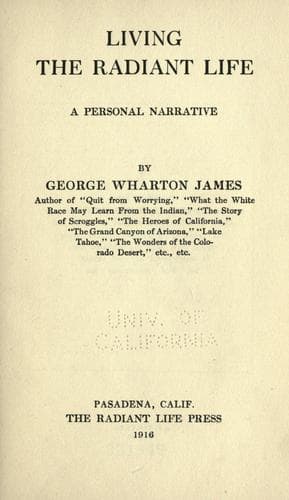
Living the Radiant Life: A Personal NarrativeJames, George Wharton
Religion
Living the Radiant Life: A Personal Narrative
James, George Wharton
Conduct of life
Henry George was a recent heroic example of contemporaneous protest
against current evils. Garibaldi, Mazzini, Victor Hugo, Kossuth, were
all noble and inspiring examples of the like spirit. Ruskin's life was a
perpetual protest against the sacrificing of beauty, peace, harmony, and
brotherhood for the rush and show of material prosperity. William
Morris's life, work, voice, and pen were ever in active, open,
contemporaneous hostility and opposition to the damnable spirit of
modern competition, and demoralizing commercialism which destroyed
artistic labor, banished fellowship, and substituted therefor the rule
of the jungle where the strong devour the weak. Thank God! the ranks of
the morally courageous have always found glad and willing recruits; men
willing to spend and be spent for the benefit of humanity; willing to be
rebels and accounted and treated as such that they might help gain
larger victories of freedom for their fellow-men.
We sometimes think that there was more moral heroism in the days gone by
than there is to-day. I do not believe it! In this matter of moral
heroism and contemporaneous rebellion against entrenched wrong, we have
many fine and noble living examples on every hand. I could mention a
hundred of them in as many minutes. A few must suffice.
When Edwin Markham wrote _The Man with the Hoe_, he showed his spirit of
contemporaneous protest and rebellion. Here was no reflection upon labor
or its dignity, as some thoughtless critics have affirmed, but it was a
tremendous and powerful onslaught upon the "Kings and Rulers of All
Lands" who permit employers to chain the laborer to the "wheel of
labor." Markham's poem is a direct challenge and throwing down of the
gauntlet to those who contend that they have a right to purchase labor
in the open market at any price, however demoralizing to mankind. It is
a contention that manhood is more than money; that the laborer is more
than the labor; and that the employers who value the labor done more
than the men who do the labor are unworthy the honor and respect of
decent men; are unworthy to be called real men because of their
tyrannical abuse of their helpless brothers.
Public-domain text, read in full here on John Shaqi.
Reviews
Reviews
No reviews yet
Be the first to share your thoughts on this work.
Elsewhere in the archive
Join the Discussion
Join the discussion
Sign in to leave a comment or review.
Sign InorCreate an account