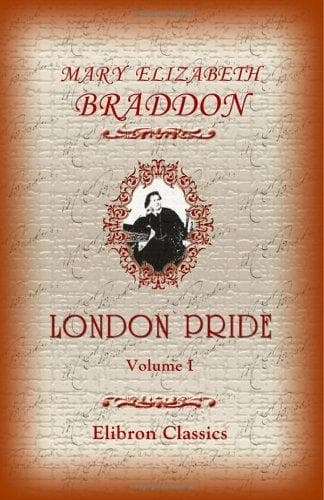
London Pride, Or, When the World Was YoungerBraddon, M. E. (Mary Elizabeth)
History
London Pride, Or, When the World Was Younger
Braddon, M. E. (Mary Elizabeth)
Great Britain -- History -- Charles II, 1660-1685 -- Fiction; London (England) -- Fiction
Her ladyship and De Malfort had always plenty to talk about. They had
the past as well as the present for their discourse, and were always
sighing for the vanished glories of their youth—at Paris, at
Fontainebleau, at St. Germain. Nor were they restricted to the
realities of the present and the memories of the past; they had that
wider world of unreality in which to circulate; they had the Scudèry
language at the tips of their tongues, the fantastic sentimentalism of
that marvellous old maid who invented the seventeenth-century hero and
heroine; or who crystallised the vanishing figures of that brilliant
age and made them immortal. All that little language of toyshop
platonics had become a natural form of speech with these two, bred and
educated in the Marais, while it was still the select and aristocratic
quarter of Paris.
To-day Hyacinth and her old playfellow had been chattering like
children, or birds in an aviary, and with little more sense in their
conversation; but at this talk of the Church’s ban, Hyacinth stopped in
her prattle and was almost serious.
“I sometimes think we shall have bad luck in this house,” she said, “or
that we shall see the ghosts of the wicked monks who were turned out to
make room for Fareham’s great-grandfather.”
“Tush, child! what do you know of their wickedness, after a century?”
“They were very wicked, I believe, for it was one of those quiet little
monasteries where the monks could do all manner of evil things, and
raise the devil, if they liked, without anybody knowing. And when Henry
the Eighth sent his Commissioners, they were taken by surprise; and the
altar at which they worshipped Beelzebub was found in a side chapel,
and a wax figure of the King stuck with arrows, like St. Sebastian. The
Abbot pretended it _was_ St. Sebastian; but nobody believed him.”
“Nobody wanted to believe him,” said Fareham. “King Henry made an
example of Chilton Abbey, and gave it to my worthy ancestor, who was a
fourth cousin of Jane Seymour’s, and had turned Protestant to please
his royal master. He went back to the Church of Rome on his death-bed,
and we Revels have been Papists ever since. I wish the Church joy of
us!”
“The Church has neither profit nor honour from you,” said his wife,
shaking her fan at him. “You seldom go to Mass; you never go to
confession.”
“I would rather keep my sins to myself, and atone for them by the pangs
of a wounded conscience. That is too easy a religion which shifts the
burden of guilt on to the shoulders of a stipendiary priest, and walks
away from the confessional absolved by the payment of a few extra
prayers.”
“I believe you are either an infidel or a Puritan.”
“A cross between the two, perhaps—a mongrel in religion, as I am a
mongrel in politics.”
Public-domain text, read in full here on John Shaqi.
Reviews
Reviews
No reviews yet
Be the first to share your thoughts on this work.
Elsewhere in the archive
Join the Discussion
Join the discussion
Sign in to leave a comment or review.
Sign InorCreate an account