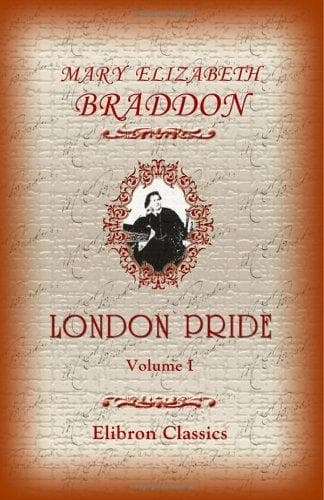
London Pride, Or, When the World Was YoungerBraddon, M. E. (Mary Elizabeth)
History
London Pride, Or, When the World Was Younger
Braddon, M. E. (Mary Elizabeth)
Great Britain -- History -- Charles II, 1660-1685 -- Fiction; London (England) -- Fiction
Angela looked up at him with sad eyes—reproachful, yet full of pity.
She remembered his wild talk, semi-delirious some of it, all feverish
and excited, during his illness, and how she had listened with aching
heart to the ravings of one so near death, and so unfit to die. And now
that the pestilence had passed him by, now that he was a strong man
again, with half a lifetime before him, her heart was still heavy for
him. She who sat in the theatre of life as a spectator had discovered
that her sister’s husband was not happy. The trifles that delighted
Hyacinth left Fareham unamused and discontented; and his wife knew not
that there was anything wanting to his felicity. She could go on
prattling like a child, could be in a fever about a fan or a bunch of
ribbons, could talk for an hour of a new play or the contents of the
French _Gazette_, while he sat gloomy and apart.
The sympathy, the companionship that should be in marriage was wanting
here. Angela saw and deplored this distance, scarce daring to touch so
delicate a theme, fearful lest she, the younger, should seem to
sermonise the elder; and yet she could not be silent for ever while
duty and religion urged her to speak.
At Chilton Abbey the sisters were rarely alone. Papillon was almost
always with them; and De Malfort spent more of his life in attendance
upon Lady Fareham than at Oxford, where he was supposed to be living.
Mrs. Lettsome and her brother were frequent guests; and coach-loads of
fine people came over from the court almost every day. Indeed, it was
only Fareham’s character—austere as Clarendon’s or Southampton’s—which
kept the finest of all company at a distance. Lady Castlemaine had
called at Chilton in her coach-and-four early in July; and her visit
had not been returned—a slight which the proud beauty bitterly
resented: and from that time she had lost no opportunity of
depreciating Lady Fareham. Happily her jests, not over refined in
quality, had not been repeated to Hyacinth’s husband.
One January afternoon the longed-for opportunity came. The sisters were
sitting alone in front of the vast mediaeval chimney, where the Abbots
of old had burnt their surplus timber—Angela busy with her embroidery
frame, working a satin coverlet for her niece’s bed; Hyacinth yawning
over a volume of Cyrus; in whose stately pages she loved to recognise
the portraits of her dearest friends, and for which she was a living
key. Angela was now familiar with the famous romance, which she had
read with deepest interest, enlightened by her sister. As an eastern
story—a record of battles and sieges evolved from a clever spinster’s
brain, an account of men and women who had never lived—the book might
have seemed passing dull; but the story of actual lives, of living,
breathing beauty, and valour that still burnt in warrior breasts, the
keen and clever analysis of men and women who were making history,
could not fail to interest an intelligent girl, to whom all things in
life were new.
Public-domain text, read in full here on John Shaqi.
Reviews
Reviews
No reviews yet
Be the first to share your thoughts on this work.
Elsewhere in the archive
Join the Discussion
Join the discussion
Sign in to leave a comment or review.
Sign InorCreate an account