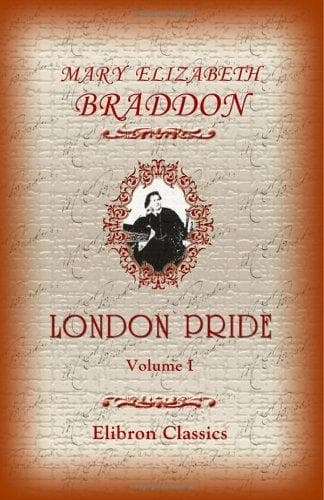
London Pride, Or, When the World Was YoungerBraddon, M. E. (Mary Elizabeth)
History
London Pride, Or, When the World Was Younger
Braddon, M. E. (Mary Elizabeth)
Great Britain -- History -- Charles II, 1660-1685 -- Fiction; London (England) -- Fiction
“Well, it is but natural, perhaps, that such a Court should inspire
such a stage,” returned Fareham, “and that for the heroic drama of
Beaumont and Fletcher, Webster, Massinger, and Ford, we should have a
gross caricature of our own follies and our own vices. Nay, so
essential is foulness to the modern stage that when the manager
ventures a serious play, he takes care to introduce it with some filthy
prologue, and to spice the finish with a filthier epilogue.”
“Zounds, Fareham!” cried Masaroon, “when one has yawned or slept
through five acts of dull heroics, one needs to be stung into
wakefulness by a high-spiced epilogue. For my taste your epilogue can’t
be too pungent to give a flavour to my oysters and Rhenish. Gud, my
lord, we must have something to talk about when we leave the
play-house!”
“His lordship is spoilt; we are all spoilt for London after having
lived in the most exquisite city in the world,” drawled Mrs. Danville,
one of Lady Fareham’s particular friends, who had been educated at the
Visitandines with the Princess Henrietta, now Duchess of Orleans. “Who
can tolerate the coarse manners and sea-coal fires of London after the
smokeless skies and exquisite courtesies of Parisian good company in
the Rue St. Thomas du Louvre—a society so refined that a fault in
grammar shocks as much as a slit nose at Charing Cross? I shudder when
I recall the Saturdays in the Rue du Temple, and compare the
conversations there, the play of wit and fancy, the elaborate arguments
upon platonic love, the graceful raillery, with any assembly in
London—except yours, Hyacinth. At Fareham House we breathe a finer air,
although his lordship’s esprit moqueur will not allow us any
superiority to the coarse English mob.”
“Indeed, Mrs. Danville, even your prejudice cannot deny London fine
gentlemen and wits,” remonstrated Sir Ralph. “A court that can boast a
Buckhurst, a Rochester, an Etherege, a Sedley——”
“There is not one of them can compare with Voiture or Godeau, with
Bussy or St. Évremond, still less with Scarron or Molière,” said De
Malfort. “I have heard more wit in one evening at Scarron’s than in a
week at Whitehall. Wit in France has its basis in thought and
erudition. Here it is the sparkle and froth of empty minds, a trick of
speech, a knack of saying brutal things under a pretence of humour,
varnishing real impertinence with mock wit. I have heard Rowley laugh
at insolences which, addressed to Louis, would have ensured the speaker
a year in the Bastille.”
“I would not exchange our easy-tempered King for your graceful despot,”
said Fareham. “Pride is the mainspring that moves Louis’ self-absorbed
soul. His mother instilled it into his mind almost before he could
speak. He was bred in the belief that he has no more parallel or fellow
than the sun which he has chosen for his emblem. And then, for moral
worth, he is little better than his cousin, Louis has all Charles’s
elegant vices, plus tyranny.”
Public-domain text, read in full here on John Shaqi.
Reviews
Reviews
No reviews yet
Be the first to share your thoughts on this work.
Elsewhere in the archive
Join the Discussion
Join the discussion
Sign in to leave a comment or review.
Sign InorCreate an account