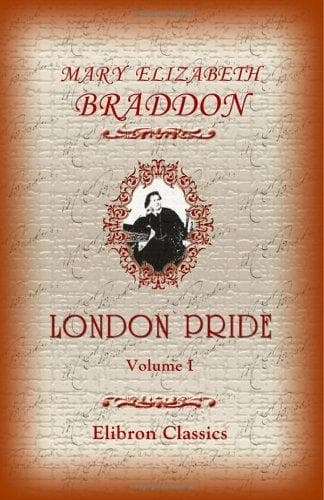
London Pride, Or, When the World Was YoungerBraddon, M. E. (Mary Elizabeth)
History
London Pride, Or, When the World Was Younger
Braddon, M. E. (Mary Elizabeth)
Great Britain -- History -- Charles II, 1660-1685 -- Fiction; London (England) -- Fiction
“You can have a chair, if you are too prudish to use my coach, but it
shall be got for you at the moment. We won’t have your own chairman and
links to chatter and betray you before you have played the ghost.
Remember you come to my party not as a guest, but as a performer. If
they ask why Lady Fareham is absent I shall say you refused to take
part in our foolery.”
“Oh, you must invent some better excuse. They will never believe
anything rational of me. Say I was disappointed of a hat or a mantua.
Well, it shall be as you wish. Angela is apt to be tiresome. I hate a
disapproving carriage, especially in a younger sister.”
Angela was puzzled by Hyacinth’s demeanour. A want of frankness in one
so frank by nature aroused her fears. She was puzzled and anxious, and
longed for Fareham’s return, lest his giddy-pated wife should be guilty
of some innocent indiscretion that might vex him.
“Oh! if she but valued him at his just worth she would value his
opinion second only to the approval of conscience,” she thought, sadly,
ever regretful of her sister’s too obvious indifference towards so kind
a husband.
CHAPTER XVI.
WHICH WAS THE FIERCER FIRE?
It was Saturday, the first of September, and the hot dry weather having
continued with but trifling changes throughout the month, the
atmosphere was at its sultriest, and the burnt grass in the parks
looked as if even the dews of morning and evening had ceased to moisten
it, while the arid and dusty foliage gave no feeling of coolness, and
the very shadows cast upon that parched ground seemed hot. Morning was
sultry as noon; evening brought but little refreshment; while the night
was hotter than the day. People complained that the season was even
more sickly than in the plague year, and prophesied a new and worse
outbreak of the pestilence. Was not this the fatal year about which
there had been darkest prophecies? 1666! Something awful, something
tragical was to make this triplicate of sixes for ever memorable.
Sixty-five had been terrible, sixty-six was to bring a greater horror;
doubtless a recrudescence of that dire malady which had desolated
London.
“And this time,” says one modish raven, “’twill be the quality that
will suffer. The lower ‘classis’ has paid its penalty, and only the
strong and hardy are left. We have plenty of weaklings and corrupt
constitutions that will take fire at a spark. I should not wonder were
the contagion to rage worst at Whitehall. The buildings lie low, and
there is ever a nucleus of fever somewhere in that conglomeration of
slaughter-houses, bakeries, kitchens, stables, cider-houses,
coal-yards, and over-crowded servants’ lodgings.”
“One gets but casual whiffs from their private butcheries and
bakeries,” says another. “What I complain of is the atmosphere of his
Majesty’s apartments, where one can scarce breathe for the stench of
those cursed spaniels he so delights in.”
Public-domain text, read in full here on John Shaqi.
Reviews
Reviews
No reviews yet
Be the first to share your thoughts on this work.
Elsewhere in the archive
Join the Discussion
Join the discussion
Sign in to leave a comment or review.
Sign InorCreate an account