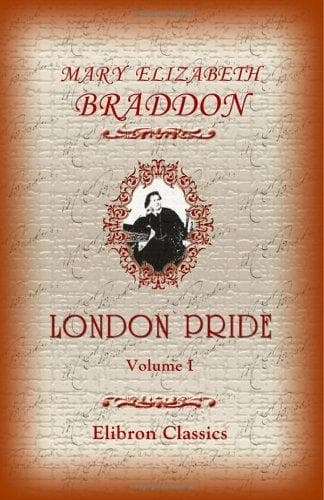
London Pride, Or, When the World Was YoungerBraddon, M. E. (Mary Elizabeth)
History
London Pride, Or, When the World Was Younger
Braddon, M. E. (Mary Elizabeth)
Great Britain -- History -- Charles II, 1660-1685 -- Fiction; London (England) -- Fiction
“You will do nothing of the kind, Mrs. Henriette; for I shall sit in
your room till you are sound asleep,” said Priscilla.
“Then you will have to sit there all night; and I shall have somebody
to talk to.”
“I shall not allow you to talk.”
“Will you gag me, or put a pillow over my face, like the Blackamoor in
the play?”
The minx and her governess retired, still disputing, after Angela had
been desperately hugged by Henriette, who brimmed over with warmest
affection in the midst of her insolence. They were gone, their voices
sounding in the stillness on the terrace, and then on the staircase,
and through the great empty rooms, where the windows were open to the
sultry night, while the host of idle servants caroused in the basement,
in a spacious room with a vaulted roof, like a college hall, where they
were free to be as noisy or as drunken as they pleased. My lady was
out, had taken only her chair, and running footmen, and had sent
chairmen and footmen back from Whitehall, with an intimation that they
would be wanted no more that night.
Angela lingered on the terrace in the sultry summer gloom, watching
solitary boats moving to and fro, shadowy as Charon’s. She dreaded the
stillness of silent rooms, and to be alone with her own thoughts, which
were not of the happiest. Her sister’s relations with De Malfort
troubled her, innocent as they doubtless were: innocent as that close
friendship of Henrietta of England with her cousin of France, when they
two spent the fair midsummer nights roaming in palace gardens, close as
lovers, but only fast friends. Malicious tongues had babbled even of
that innocent friendship; and there were those who said that if
Monsieur behaved liked a brute to his lovely young wife, it was because
he had good reason for jealousy of Louis in the past, as well as of De
Guiche in the present. These innocent friendships are ever the cause of
uneasiness to the lookers-on. It is like seeing children at play on the
edge of a cliff. They are too near danger and destruction.
Hyacinth, being about as able to carry a secret as to carry an
elephant, had betrayed by a hundred indications that a plot of some
kind was being hatched between her and De Malfort. And to-night, before
going out, she had made too much fuss about so simple a matter as a
basset-party at Lady Sarah’s, who had her basset-table every night, and
was popularly supposed to keep house upon her winnings, and to have no
higher code of honour than De Gramont had when he invited a brother
officer to supper on purpose to rook him.
Mr. Killigrew’s comedy had been discussed in Angela’s hearing. People
who had been deprived of the theatre for over a year were greedy and
eager spectators of all the plays produced at Court; but this
production was an exceptional event. Killigrew’s wit and impudence and
impecuniosity were the talk of the town, and anything written by that
audacious jester was sure to be worth hearing.
Public-domain text, read in full here on John Shaqi.
Reviews
Reviews
No reviews yet
Be the first to share your thoughts on this work.
Elsewhere in the archive
Join the Discussion
Join the discussion
Sign in to leave a comment or review.
Sign InorCreate an account