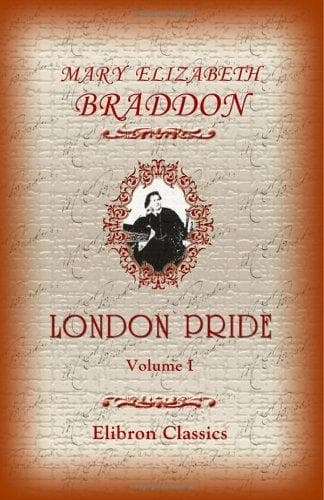
London Pride, Or, When the World Was YoungerBraddon, M. E. (Mary Elizabeth)
History
London Pride, Or, When the World Was Younger
Braddon, M. E. (Mary Elizabeth)
Great Britain -- History -- Charles II, 1660-1685 -- Fiction; London (England) -- Fiction
She submitted angrily, passionately regretting the man whose presence
had long been the brightest element in her life. Her cheek paled; she
grew indifferent to the amusements which had been her sole occupation;
she sulked in her rooms, equally avoiding her children and their aunt;
and, indeed, seemed to care for no one’s society except Mrs. Lewin’s.
The Court milliner had business with her ladyship every day, and was
regaled with cakes and liqueurs in her ladyship’s dressing-room.
“You must be very busy about new gowns, Hyacinth,” her husband said to
her one day at dinner. “I meet the harridan from Covent Garden on the
stairs every morning.”
“She is not a harridan, whatever that elegant word may mean. And as for
gowns, it would be wiser for me to order no new ones, since it is but
likely I shall soon have to wear mourning for an old friend.”
She looked at her husband, defying him. He rose from the table with a
sigh, and walked out of the room. There was war between them, or at
best an armed neutrality. He looked back, and saw that he had been
blind to the things he should have seen, dull and unobservant where he
should have had sense and understanding.
“I did not care enough for my honour,” he thought. “Was it because I
cared too little for my wife? It is indifference, and not love, that is
blind.”
Angela saw the cloud that overshadowed Fareham House with deepest
distress; and yet felt herself powerless to bring back sunshine. Her
sister met her remonstrances with scorn.
“Do you take the part of a tyrant against your own flesh and blood?”
she asked. “I have been too tame a slave. To keep me away from the
Court while I was young and worth looking at—to deny me amusements and
admiration which are the privilege of every woman of quality—to forbid
me the play-house, and make a country cousin of me by keeping me
ignorant of modern wit. I am ashamed of my compliance.”
“Nay, dearest, was it not an evidence of his love that he should desire
you to keep your mind pure as well as your face fair?”
“No, he has never loved me. It is only a churlish jealousy that would
shut me up in a harem like a Turk’s wife, and part me from the friend I
like best in the world—with the purest platonic affection.”
“Hyacinth, don’t be angry with me for being out of the fashion; but
indeed I cannot think it right for a wife to care for the company of
any other man but her husband.”
Public-domain text, read in full here on John Shaqi.
Reviews
Reviews
No reviews yet
Be the first to share your thoughts on this work.
Elsewhere in the archive
Join the Discussion
Join the discussion
Sign in to leave a comment or review.
Sign InorCreate an account