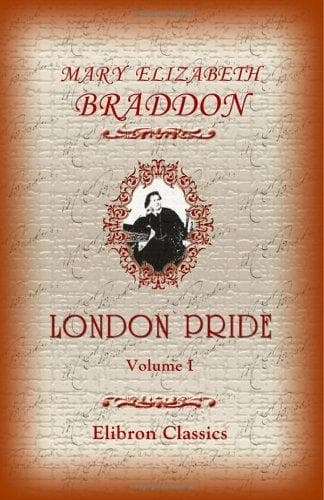
London Pride, Or, When the World Was YoungerBraddon, M. E. (Mary Elizabeth)
History
London Pride, Or, When the World Was Younger
Braddon, M. E. (Mary Elizabeth)
Great Britain -- History -- Charles II, 1660-1685 -- Fiction; London (England) -- Fiction
“Nay, love, no bad names! ’Tis a sorry pass England has come to when
the most conspicuous personage at her Court is the King’s mistress. I
was with Queen Henrietta at Paris, who received me mighty kindly, and
bewailed with me over the contrast betwixt her never-to-be-forgotten
husband and his sons. They have nothing of their father, she told me,
neither in person nor in mind. ‘I know not whence their folly comes to
them!’ she cried. It would have been uncivil to remind her that her own
father, hero as he was, had set no saintly example to royal husbands;
and that it is possible our princes take more of their character from
their grandfather Henry than from the martyr Charles. Poor lady, I am
told she left London deep in debt, after squandering her noble income
of these latter years, and that she has sunk in the esteem of the
French court by her alliance with Jermyn.”
“I can but wonder that she, above all women, should ever cease to be a
widow.”
“She comes of a light-minded race and nation, Angela; and it is easy to
her to forget; or she would not easily forget that so-adoring husband
whose fortunes she ruined. His most fatal errors came from his
subservience to her. When I saw her in her new splendour at Somerset
House, all smiles and gaiety, with youth and beauty revived in the
sunshine of restored fortune, I could but remember all he was, in
dignity and manly affection, proud and pure as King Arthur in the old
romance, and all she cost him by womanish tyrannies and prejudices, and
difficult commands laid upon him at a juncture of so exceeding
difficulty.”
The sisters listened in respectful silence. The old cavalier cut a
fresh slice of chine, sighed, and continued his sermon.
“I doubt that while we, the lookers on, remember, they, the actors,
forget; for could the son of such a noble victim wallow in a profligate
court, surrender himself to the devilish necromancies of vicious women
and viler men, if he remembered his father’s character, and his
father’s death? No; memory must be a blank, and we, who suffered with
our royal master, are fools to prate of ingratitude or neglect, since
the son who can forget such a father may well forget his father’s
servants and friends. But we will not talk of public matters in the
first hour of our greeting. Nor need I prate of the King, since I have
not come back to England to clap a periwig over my grey hairs, and play
waiter upon Court favour, and wear out the back of my coat against the
tapestry at Whitehall, standing in the rear of the crowd, to have my
toes trampled upon by the sharp heels of Court ladies, and an elbow in
my stomach more often than not. I am come, like Wolsey, girls, to lay
my old bones among you. Art thou ready, Angela? Hast thou had enough of
London, and play-houses, and parks; and wilt thou share thy father’s
solitude in Buckinghamshire?”
“With all my heart, sir.”
Public-domain text, read in full here on John Shaqi.
Reviews
Reviews
No reviews yet
Be the first to share your thoughts on this work.
Elsewhere in the archive
Join the Discussion
Join the discussion
Sign in to leave a comment or review.
Sign InorCreate an account