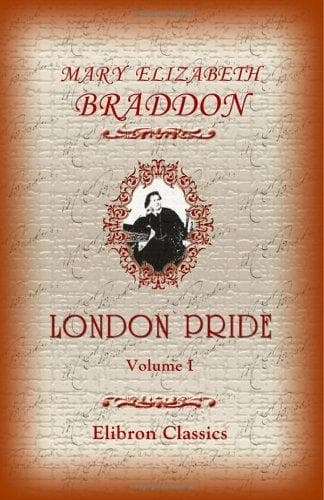
London Pride, Or, When the World Was YoungerBraddon, M. E. (Mary Elizabeth)
History
London Pride, Or, When the World Was Younger
Braddon, M. E. (Mary Elizabeth)
Great Britain -- History -- Charles II, 1660-1685 -- Fiction; London (England) -- Fiction
The quiet days went on, and the old Cavalier settled down into a
tranquil happiness, which comforted his daughter with the feeling of
duty prosperously fulfilled. To make this dear old man happy, to be his
companion and friend, to share in his rides and rambles, and of an
evening to play the games he loved on the old shovel-board in the hall,
or an old-fashioned game at cards, or backgammon beside the fire in the
panelled parlour, reconciled her to the melancholy of an existence from
which hope had vanished like a light extinguished. It seemed to her as
if she had dropped back into the old life with her great-aunt. The
Manor House was just a little gayer than the Flemish Convent—for the
voices and footsteps of the few inhabitants had a freer sound, which
made the few seem more populous than the many. And then there were the
dogs. What a powerful factor in home life those four-footed friends
were! Out-of-doors a stone barn had been turned into a kennel for five
couple of foxhounds; indoors a couple of setters, sent by a friend over
sea from Waterford, had insinuated themselves into the parlour, where
they established themselves as household favourites, to the damage of
those higher hereditary qualities which fitted them for distinction
with the guns. Indeed, the old Knight was too fond of his fireside
companions to care very much if he missed a bird now and then because
Cataline was over-fed or Caesar disobedient. They stood sentinel on
each side of his chair at dinner, like supporters to a coat-of-arms.
Angela had her own particular favourite in a King Charles’s spaniel. It
was the very dog which had first greeted her in the silence of the
plague-stricken house. She had chosen this one from the canine troop
when her sister offered her the gift of a dog at parting, though
Hyacinth had urged her to take something younger than this, which was
over five years old.
“He will die just when you love him best,” she said.
“Nay; but such partings must come. I love this one because he was with
me in fear and sadness. He used to cling to me, and look up and lick my
face, as if he were telling me to hope, when my brother seemed marked
for death.”
“Poor Fareham! Did you desire every dog in the house—and my spaniels
are of the same breed as the King’s, and worth fifty pound apiece—you
have a right to take them. But, indeed, I would rather you chose a
younger dog—and with a shorter nose; but, of course, if you like this
one best——”
Public-domain text, read in full here on John Shaqi.
Reviews
Reviews
No reviews yet
Be the first to share your thoughts on this work.
Elsewhere in the archive
Join the Discussion
Join the discussion
Sign in to leave a comment or review.
Sign InorCreate an account