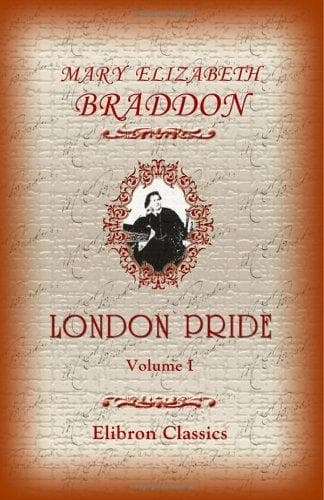
London Pride, Or, When the World Was YoungerBraddon, M. E. (Mary Elizabeth)
History
London Pride, Or, When the World Was Younger
Braddon, M. E. (Mary Elizabeth)
Great Britain -- History -- Charles II, 1660-1685 -- Fiction; London (England) -- Fiction
Angela held by her first choice, and Ganymede was the companion of all
her hours, walked and lived with her, and slept on a satin cushion at
the foot of her spacious four-post bed, and fretted and whined if she
left him shut in an empty room for half an hour; yet with all his
refinements, and his air of being as dainty a gentleman as any spark of
quality, he had a gross passion for the kitchen, and after nibbling
sweet cakes delicately out of his mistress’s taper fingers, he would
waddle through a labyrinth of passages, and find his way to the
hog-tub, there to wallow in slush and broken victuals, till he all but
drowned himself in a flood of pot-liquor. It was hard to reconcile so
much beauty and grace, such eloquent eyes and satin coat, with tastes
and desires so vulgar; and Angela sighed over him when a scullion
brought him to her, greasy and penitent, to crouch at her feet, and
deprecate her disgust with an abject tail.
Oh, tranquil, duteous life, how fair it might have seemed, as spring
advanced, and the garden smiled with the promise of summer, were it not
for that aching sense of loss, the some one missing, whose absence made
all things grey and cold!
Yes, she knew now, fully realising as she had never done before, how
long and how utterly her life had been influenced by an affection which
even to contemplate was mortal sin. Yet to extinguish memory was not
within her power. She looked back and remembered how Fareham’s
protecting love had enfolded her with its gentle warmth, in those happy
days at Chilton; how all she knew of poetry and the drama, of ethics
and philosophy, had been learnt from him. She recalled his evident
delight in opening the rich treasures of a mind which he had never
ceased to cultivate, even amidst the vicissitudes of a soldier’s life,
in making her familiar with the writers he loved, and teaching her to
estimate, and to discuss them. And in all their talk together he had
been for the most part careful to avoid disparagement of the religion
in which she believed—so that it was only some chance revelation of the
infidel’s narrow outlook that reminded her of his unbelief.
Yes, his love had been round her like an atmosphere; and she had been
exquisitely happy while that unquestioning affection was hers. On her
part there had been neither doubt nor fear. It seemed the most natural
thing in the world that he should be fond of her and she of him.
Affinity had made them brother and sister; and then they had been
together in sickness and in peril of death. It might be true, as he
himself had affirmed, that her so happy arrival had saved his life;
since just those hours between the departure of his attendants and the
physician’s evening visit may have been the crisis of his disease.
Well, it was past—the exquisite bliss, the unconscious sin, the
confidence, the danger. All had vanished into the grave of
irrecoverable days.
Public-domain text, read in full here on John Shaqi.
Reviews
Reviews
No reviews yet
Be the first to share your thoughts on this work.
Elsewhere in the archive
Join the Discussion
Join the discussion
Sign in to leave a comment or review.
Sign InorCreate an account