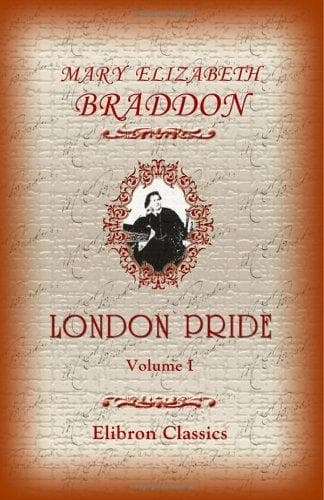
London Pride, Or, When the World Was YoungerBraddon, M. E. (Mary Elizabeth)
History
London Pride, Or, When the World Was Younger
Braddon, M. E. (Mary Elizabeth)
Great Britain -- History -- Charles II, 1660-1685 -- Fiction; London (England) -- Fiction
“No, child; I had seen many handsome women before I met your mother.
She came over in ’35 with the Marquise, who had been lady of honour to
Queen Marie before the Princess Henriette married our King, and Queen
Henriette was fond of her, and invited her to come to London, and she
divided her life between the two countries till the troubles, when she
was one of the first to scamper off, as you know. My wife was little
more than a child when I saw her at Court, hiding behind her mother’s
large sleeves. I had seen handsomer women; but she was the first whose
face went straight to my heart. And it has dwelt there ever since,” he
concluded, with a sudden break in his voice.
“Then you can comprehend, dear sir, that a man may be honourable, and
courteous, and handsome, and yet not win a woman’s love.”
“Ah, it is not the man; it is love that should win, sweetheart. Love is
worthy of love. When that is the true coin it should buy its reward.
Indeed I have rarely seen it otherwise. Love begets love. Louise de la
Vallière is not the handsomest woman at the French Court. Her
complexion has suffered from small-pox, and she has a defective gait;
but the King discovered a so fond and romantic attachment to his
person, a love ashamed of loving, the very poetry of affection; and
that discovery made him her slave. The Court beauties—sultanas splendid
as Vashti—look on in angry wonder. Louise is adored because she began
by adoring. Mind, I do not praise or excuse her, for ’tis a mortal sin
to love a married man, and steal him from his wife. Foolish child, how
your cheek crimsons! I do wrong to shock your innocence with my babble
of a King’s mistress.”
Denzil arrived at sunset, on horseback, with a mounted servant in
attendance, carrying his saddle-bags and fishing tackle. It was but a
short day’s ride from Oxford. Fareham’s rides with the hounds must have
brought him sometimes within a few miles of the Manor Moat Hyacinth and
her children might have ridden over in their coach; and indeed she had
promised her sister a visit in more than one of her letters. But there
had been always something to postpone the expedition—company at home,
or bad weather, or a fit of the vapours—so that the sisters had been as
much asunder as if the elder had been in Yorkshire or Northumberland.
Public-domain text, read in full here on John Shaqi.
Reviews
Reviews
No reviews yet
Be the first to share your thoughts on this work.
Elsewhere in the archive
Join the Discussion
Join the discussion
Sign in to leave a comment or review.
Sign InorCreate an account