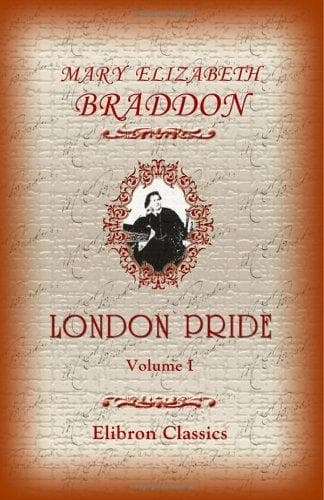
London Pride, Or, When the World Was YoungerBraddon, M. E. (Mary Elizabeth)
History
London Pride, Or, When the World Was Younger
Braddon, M. E. (Mary Elizabeth)
Great Britain -- History -- Charles II, 1660-1685 -- Fiction; London (England) -- Fiction
Denzil brought news of the household at Chilton. Lady Fareham was as
charming as ever, and though she had complained very often of bad
health, she had been so lively and active whenever the whim took her,
riding with hawk and hound, visiting about the neighbourhood, driving
into Oxford, that Denzil was of opinion her ailments were of the
spirits only, a kind of rustic malady to which most fine ladies were
subject, the nostalgia of paving-stones and oil lamps. Henriette—she
now insisted upon discarding her nick-name—was less volatile than in
London, and missed her aunt sorely, and quarrelled with mademoiselle,
who was painfully strict upon all points of speech and manners.
George’s days of unalloyed idleness were also ended, for the Roman
Catholic priest was now a resident in the house as the little boy’s
tutor, besides teaching ‘Henriette the rudiments, and instructing her
in her mother’s religion.
Denzil told them even of the guests he had met at the Abbey; but of the
master of the house his lips spoke not, till Sir John questioned him.
“And Fareham? Has he that same air of not belonging to the family which
I remarked of him in London?”
“His lordship has ever an air of being aloof from everybody,” Denzil
answered gravely. “He is solitary even in his sports, and his indoor
life is mostly buried in a book.”
“Ah, those books, they will be the ruin of nations! As books multiply,
great actions will grow less. Life’s golden hours will be wasted in
dreaming over the fancies of dead men; and the world will be over-full
of brooding philosophers like Descartes, or pamphleteers like your
friend Mr. Milton.”
“Nay, sir, the world is richer for such a man as John Milton, who has
composed the grandest poem in our language—an epic on a scale and
subject as sublime as the Divine Comedy of Dante.”
“I never saw Mr. Dante’s comedy acted, and confess myself ignorant of
its merits.”
“Comedy, sir, with Dante, is but a name. The Italian poem is an epic,
and not a play. Mr. Milton’s poem will be given to the world shortly,
though, alas! he will reap little substantial reward for the
intellectual labour of years. Poetry is not a marketable commodity in
England, save when it flatters a royal patron, or takes the vulgarer
form of a stage-play. But this poem of Mr. Milton’s has been the solace
of his darkened life. You have heard, perhaps, of his blindness?”
Public-domain text, read in full here on John Shaqi.
Reviews
Reviews
No reviews yet
Be the first to share your thoughts on this work.
Elsewhere in the archive
Join the Discussion
Join the discussion
Sign in to leave a comment or review.
Sign InorCreate an account