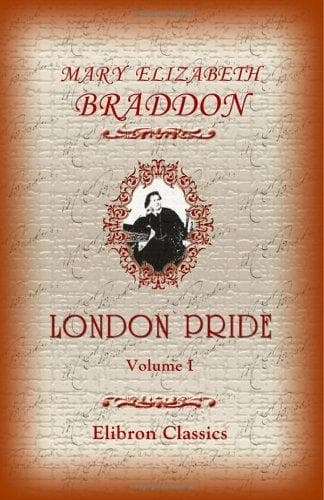
London Pride, Or, When the World Was YoungerBraddon, M. E. (Mary Elizabeth)
History
London Pride, Or, When the World Was Younger
Braddon, M. E. (Mary Elizabeth)
Great Britain -- History -- Charles II, 1660-1685 -- Fiction; London (England) -- Fiction
“My sin has found me out!” she said to herself, as she paced the garden
with the rapid steps that indicate a distempered spirit. “What right
has he to pry into the depths of my mind, and ferret out all that there
is of evil in my nature? Well, he goes the surest way to make me hate
him. If ever he comes here again, I will run away and hide from all who
know me. I would rather be a farm-servant, and rise at daybreak to work
in the fields, than endure his insolence.”
She had to bear worse pain before Denzil had ridden far upon his
journey; for her father came to the garden to seek her, eager to know
the result of his _protégé’s_ wooing.
“Well, sweetheart,” he began, taking her to his bosom and kissing her.
“Do I salute the future Lady Warner?”
“No, sir; I am too well content with the name I inherit to desire any
other.”
“That is gracefully said, chérie; but I want to see my ewe lamb happily
wedded. Has thy sweetheart stolen away without finding courage to ask
the question that has been on the tip of his tongue for the last six
weeks?”
“He has been both importunate and impertinent, sir, and he has had his
answer. I hope I may never see him again.”
“What! you have refused him? You must be mad!”
“No, sir; sober and sane enough to know when I am happy. I told you
before this gentleman came here that I did not mean to marry. Surely I
am not so unloving a daughter that I must be driven to take a husband,
because my father will not have me.”
“Angela, it is for your own safety and welfare I would see you married.
What have you to succeed to when I am gone? An impoverished estate, in
a country that has seen such rough changes within a score of years that
one dare scarcely calculate upon a prolonged time of safety, even in
this sequestered valley. God only knows when cannon-balls may tear up
our fields, and bullets whistle through the copses. This Monarchy,
restored with such a clamorous approval, may endure no longer than the
Commonwealth, which was thought to be lasting. His Majesty’s trivial
life and gross extravagance have disgusted and alarmed some who loved
him dearly, and have set the common people questioning whether the
rough rule of the Protector were not better than the ascendency of
shameless women and dissolute men. The pageantry of Whitehall may
vanish like a parchment scroll in a furnace, and Charles, who has
tasted the sours of exile, may be again a wanderer, dependent on the
casual munificence of foreign states; and in such an evil hour,”
continued the Knight, his mind straying from the contemplation of his
daughter’s future to the memory of his own wrongs, “Charles Stuart may
remember the old puts who fought and suffered for his father, and how
scurvy a recompense they had for their services.”
He reverted to Denzil’s offer after a brief silence, Angela walking
dutifully by his side, prepared to suffer any harshness upon his part
without complaining.
Public-domain text, read in full here on John Shaqi.
Reviews
Reviews
No reviews yet
Be the first to share your thoughts on this work.
Elsewhere in the archive
Join the Discussion
Join the discussion
Sign in to leave a comment or review.
Sign InorCreate an account