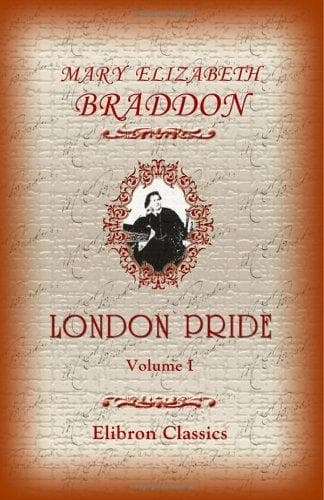
London Pride, Or, When the World Was YoungerBraddon, M. E. (Mary Elizabeth)
History
London Pride, Or, When the World Was Younger
Braddon, M. E. (Mary Elizabeth)
Great Britain -- History -- Charles II, 1660-1685 -- Fiction; London (England) -- Fiction
“You have said the word, sir. ’Tis because it is so fleeting I must
needs take care of my beauty. We poor women are like the butterflies
and the roses. We have as brief a summer. You men, who value us only
for our outward show, should pardon some vanity in creatures so
ephemeral.”
“Ephemeral scarce applies to a sex which owns such an example as your
grandmother, who has lived to reckon her servants among the grandsons
of her earliest lovers.”
“Not lived, sir! No woman lives after thirty. She can but exist, and
dream that she is still admired. La Marquise has been dead for the last
twenty years, but she won’t own it. Ah, sir, c’est un triste supplice
to _have been_! I wonder how those poor ghosts can bear that earthly
purgatory which they call old age? Look at Madame de Sablé, par
exemple, once a beauty, now only a tradition. And Queen Anne! Old
people say she was beautiful, and that Buckingham risked being torn by
wild horses—like Ravaillac—only to kiss her hand by stealth in a
moonlit garden; and would have plunged England in war but for an excuse
to come back to Paris. Who would go to war for Anne’s haggard
countenance nowadays?”
Even in Lady Fareham’s household the Cavalier soon began to fancy
himself an inhabitant too much; a dull, grey ghost from a tragical
past. He could not keep himself from talking of the martyred King, and
those bitter years through which he had followed his master’s sinking
fortunes. He told stories of York and of Beverley; of the scarcity of
cash which reduced his Majesty’s Court to but one table; of that bitter
affront at Coventry; of the evil omens that had marked the raising of
the Standard on the hill at Nottingham, and filled superstitious minds
with dark forebodings, reminding old men of that sad shower of rain
that fell when Charles was proclaimed at Whitehall, on the day of his
accession, and of the shock of earthquake on his coronation day; of
Edgehill and Lindsey’s death; of the profligate conduct of the Cavalier
regiments, and the steady, dogged force of their psalm-singing
adversaries; of Queen Henrietta’s courage, and beauty, and wilfulness,
and her fatal influence upon an adoring husband.
“She wanted to be all that Buckingham had been,” said Sir John,
“forgetting that Buckingham was the King’s evil genius.”
Public-domain text, read in full here on John Shaqi.
Reviews
Reviews
No reviews yet
Be the first to share your thoughts on this work.
Elsewhere in the archive
Join the Discussion
Join the discussion
Sign in to leave a comment or review.
Sign InorCreate an account