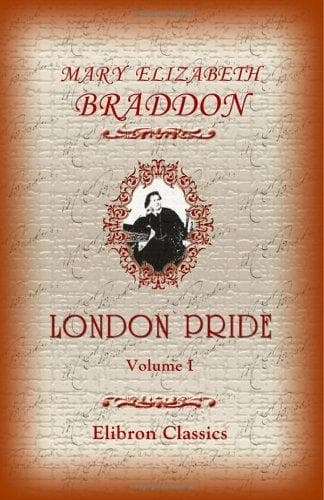
London Pride, Or, When the World Was YoungerBraddon, M. E. (Mary Elizabeth)
History
London Pride, Or, When the World Was Younger
Braddon, M. E. (Mary Elizabeth)
Great Britain -- History -- Charles II, 1660-1685 -- Fiction; London (England) -- Fiction
“Nothing could happen luckier,” said Lady Fareham, when she had saluted
Denzil, and embraced her father with “Pish, sir! how you smell of
clover and new-mown grass! I vow you have smothered my mantua with
dust.”
Father and sweetheart were called upon to assist in choosing the
wedding gown—a somewhat empty compliment on the part of Lady Fareham,
since she would not hear of the simple canary brocade which Denzil
selected, and which Mrs. Lewin protested was only good enough to make
his lady a bed-gown; or of the pale grey atlas which her father
considered suitable—since, indeed, she would have nothing but a white
satin, powdered with silver fleurs de luces, which she remarked, _en
passant_, would have become the Grande Mademoiselle, had she but
obtained her cousin’s permission to cast herself away on Lauzun.
“Dear sister, can you consider a fabric fit for a Bourbon Princess a
becoming gown for me?” remonstrated Angela.
“Yes, child; white and silver will better become thee than poor Louise,
who has no more complexion left than I have. She was in her heyday when
she held the Bastille, and when she and Beaufort were two of the most
popular people in Paris. She has made herself a laughing-stock since
then. That is settled, Lewin”—with a nod to the milliner—“the silver
fleurs de luces for the wedding mantua. And now be quick with your
samples.”
All Angela’s remonstrances were as vain to-day as they had been on the
occasion of her first acquaintance with Mrs. Lewin. The excitement of
discussing and selecting the finery she loved affected Lady Fareham’s
spirits like a draught of saumur. She was generous by nature,
extravagant by long habit.
“Sure it would be a hard thing if I could not give you your wedding
clothes, when you are marrying the man I chose for you,” she protested.
“The cherry-coloured farradine, by all means, Lewin; ’tis the very
shade for my sister’s fair skin. Indeed, Denzil”—nodding at him, as he
stood watching them, with that hopelessly bewildered air of a man in a
milliner’s shop—“I have been your best friend from the beginning, and,
but for me, you might never have won your sweetheart to listen to you.
Mazarine hoods are as ancient as the pyramids, Lewin. Pr’ythee show us
something newer.”
It was late in the evening when the two coaches left the Manor gate.
Hyacinth had been in no haste to return to the Abbey. There was nobody
there who wanted her, she protested, and there would be a moon after
nine o’clock, and she had servants enough to take care of her on the
road; so Mrs. Lewin and her ladyship’s woman were entertained in the
steward’s room, where Reuben held forth upon the splendour that had
prevailed in his master’s house before the troubles—and where the
mantua-maker ate and drank all she could get, and dozed and yawned
through the old man’s reminiscences.
Public-domain text, read in full here on John Shaqi.
Reviews
Reviews
No reviews yet
Be the first to share your thoughts on this work.
Elsewhere in the archive
Join the Discussion
Join the discussion
Sign in to leave a comment or review.
Sign InorCreate an account