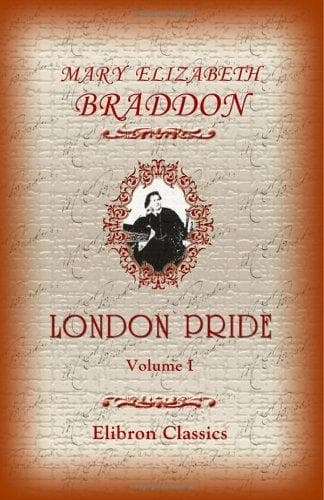
London Pride, Or, When the World Was YoungerBraddon, M. E. (Mary Elizabeth)
History
London Pride, Or, When the World Was Younger
Braddon, M. E. (Mary Elizabeth)
Great Britain -- History -- Charles II, 1660-1685 -- Fiction; London (England) -- Fiction
The afternoon was spent more pleasantly by the quality, who sat about
in the sunny garden, or sauntered by the fish pond and fed the carp—and
took a dish of the Indian drink which the sisters loved, in the pergola
at the end of the grass walk.
Hyacinth now affected a passion for the country, and quoted the late
Mr. Cowley in praise of rusticity.
“Oh, how delicious is this woodland valley,” she cried.
“‘Here let me, careless and unthoughtful lying,
Hear the soft winds, above me plying,
With all their wanton boughs dispute.’
Poor Cowley, he might well love the country, for he was shamefully
treated in town—a devoted servant to bankrupt royalty for all the best
years of his life, and fobbed off with a compliment when the King came
into power. Ah me, ’tis an ill world we live in, and London is the most
hateful spot in it,” she concluded, with a sigh.
“And yet you will have me married nowhere else, sister?”
“Oh, for a wedding or a christening one must have a crowd of fine
people. It would go about that Lady Fareham was quite out of fashion if
I were content to see only ploughmen and dairy-maids, and a petty
gentleman or two with their ill-dressed wives, at my sister’s marriage.
London is the only decent place—after Paris—to live in; but the country
is a peacefuller place in which to die.”
A heart-breaking sigh emphasised the sentence, and Angela scrutinised
her sister’s face with increased concern.
“Dear love, I fear you are hiding something from me; and that you are
seriously indisposed,” she said earnestly.
“If I am I do not know it. But when one is weary of living there is
only one sensible thing left to do—if Providence will but be kind and
help one to do it. I am not for dagger or poison, or for a plunge in
deep water. But to fade away in a gentle disease—a quiet ebbing of the
vital stream—is the luckiest thing that can befall one who is tired of
life.”
Alarmed at hearing her sister talk in this melancholy strain, and still
more alarmed by the change in her looks, sunken cheeks, hectic flush,
fever-bright eyes, Angela entreated Lady Fareham to stay at the Manor,
and be nursed and cared for.
“Oh, I know your skill in nursing, and your power over a sick person,”
Hyacinth interjected scornfully, and then in the next moment apologised
for the little spurt of retrospective jealousy.
“Stay with us, love, and let us make you happier than you are at
Chilton,” pleaded Angela; but Hyacinth, who had been protesting that
nobody wanted her, now declared that she could not leave home, and
recited a list of duties, social and domestic.
Public-domain text, read in full here on John Shaqi.
Reviews
Reviews
No reviews yet
Be the first to share your thoughts on this work.
Elsewhere in the archive
Join the Discussion
Join the discussion
Sign in to leave a comment or review.
Sign InorCreate an account