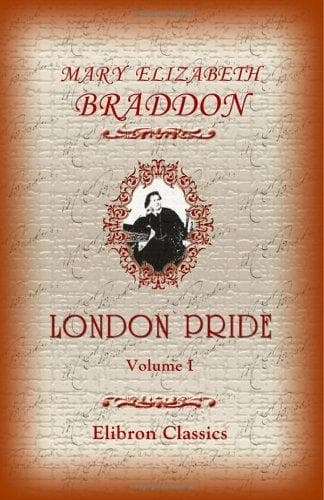
London Pride, Or, When the World Was YoungerBraddon, M. E. (Mary Elizabeth)
History
London Pride, Or, When the World Was Younger
Braddon, M. E. (Mary Elizabeth)
Great Britain -- History -- Charles II, 1660-1685 -- Fiction; London (England) -- Fiction
Most alarming of all was the news that the Queen-mother had fled with
all her people, and most of her treasures, from her palace at Somerset
House—for Henrietta Maria was not a woman to fly before a phantom fear.
She had seen too much of the stern realities of life to be scared by
shadows; and she had neither establishment nor power in France equal to
those she left in England. In Paris the daughter of the great Henry was
a dependent. In London she was second only to the King; and her Court
was more esteemed than Whitehall.
“If she has fled, there must be reason for it,” said the newly elected
Superior, who boasted of correspondents at Paris, notably a cousin in
that famous convent, the Visitandines de Chaillot, founded by Queen
Henrietta, and which had ever been a centre of political and religious
intrigue, the most fashionable, patrician, exalted, and altogether
worldly establishment.
Alarmed at this dismal news, Angela wrote urgently to her sister, but
with no effect; and the passage of every day, with occasional rumours
of an increasing death-rate in London, strengthened her fears, until
terror nerved her to a desperate resolve. She would go to London to see
her sister; to nurse her if she were sick; to mourn for her if she were
dead.
The Superior did all she could to oppose this decision, and even
asserted authority over the pupil who, since her eighteenth year had
been released from discipline, subject but to the lightest laws of the
convent. As the great-niece and beloved child of the late Superior she
had enjoyed all possible privileges; while the liberal sum annually
remitted for her maintenance gave her a certain importance in the
house.
And now on being told she must not go, her spirit rose against the
Superior’s authority.
“I recognise no earthly power that can keep me from those I love in
their time of peril!” she said.
“You do not know that they are in sickness or danger. My last letters
from Paris stated that it was only the low people whom the contagion in
London was attacking.”
“If it was only the low people, why did the Queen-mother leave? If it
was safe for my sister to be in London it would have been safe for the
Queen.”
“Lady Fareham is doubtless in Oxfordshire.”
“I have written to Chilton Abbey as well as to Fareham House, and I can
get no answer. Indeed, reverend mother, it is time for me to go to
those to whom I belong. I never meant to stay in this house after my
aunt’s death. I have only been waiting my father’s orders. If all be
well with my sister I shall go to the Manor Moat, and wait his commands
quietly there. I am home-sick for England.”
“You have chosen an ill time for home-sickness, when a pestilence is
raging.”
Public-domain text, read in full here on John Shaqi.
Reviews
Reviews
No reviews yet
Be the first to share your thoughts on this work.
Join the Discussion
Join the discussion
Sign in to leave a comment or review.
Sign InorCreate an account