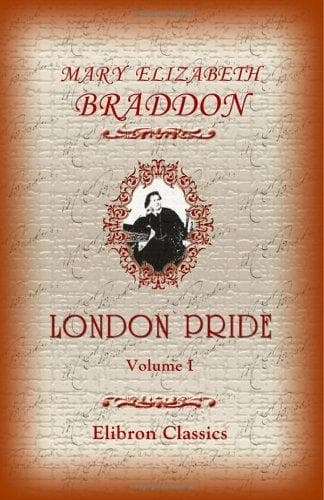
London Pride, Or, When the World Was YoungerBraddon, M. E. (Mary Elizabeth)
History
London Pride, Or, When the World Was Younger
Braddon, M. E. (Mary Elizabeth)
Great Britain -- History -- Charles II, 1660-1685 -- Fiction; London (England) -- Fiction
To Angela’s mind the life at Chilton was full of change and joyous
expectancy. No hour of the day but offered some variety of recreation,
from battledore and shuttlecock in the _plaisance_ to long days with
the hounds or the hawks. Angela learnt to ride in less than a month,
instructed by the stud-groom, a gentleman of considerable importance in
the household; an old campaigner, who had groomed Fareham’s horses
after many a battle, and many a skirmish, and had suffered scant food
and rough quarters without murmuring; and also with considerable
assistance and counsel from Lord Fareham, and occasional lectures from
Papillon, who was a Diana at ten years old, and rode with her father in
the first flight. Angela was soon equal to accompanying her sister in
the hunting-field, for Hyacinth liked following the chase after the
French rather than the English fashion, affecting no ruder sport than
to wait at an opening of the wood, or on the crest of a common, to see
hounds and riders sweep by; or, favoured by chance now and then, to
signal the villain’s whereabouts by a lace handkerchief waved high
above her head. This was how a beautiful lady who had hunted in the
forests of St. Germain and Fontainebleau understood sport; and such
performances as this Angela found easy and agreeable. They had many
cavaliers who came to talk with them for a few minutes, to tell them
what was doing or not doing yonder where the hounds were hidden in
thicket or coppice; but Henri de Malfort was their most constant
attendant. He rarely left them, and dawdled through the earlier half of
an October day, walking his horse from point to point, or dismounting
at sheltered corners to stand and talk at Lady Fareham’s side, with a
patience that made Angela wonder at the contrast between English
headlong eagerness, crashing and splashing through hedge and brook, and
French indifference.
“I have not Fareham’s passion for mud,” he explained to her, when she
remarked upon his lack of interest in the chase, even when the music of
the hounds was ringing through wood and valley, now close beside them,
anon diminishing in the distance, thin in the thin air. “If he comes
not home at dark plastered with mire from boots to eyebrows he will
cry, like Alexander, ‘I have lost a day.’”
Partridge-hawking in the wide fields between Chilton and Nettlebed was
more to Malfort’s taste, and it was a sport for which Lady Fareham
expressed a certain enthusiasm, and for which she attired herself to
the perfection of picturesque costume. Her hunting-coats were marvels
of embroidery on atlas and smooth cloth; but her smartest velvet and
brocade she kept for the sunny mornings, when, with hooded peregrine on
wrist, she sallied forth intent on slaughter, Angela, Papillon, and De
Malfort for her _cortége_, an easy-paced horse to amble over the grass
with her, and the Dutch falconer to tell her the right moment at which
to slip her falcon’s hood.
Public-domain text, read in full here on John Shaqi.
Reviews
Reviews
No reviews yet
Be the first to share your thoughts on this work.
Elsewhere in the archive
Join the Discussion
Join the discussion
Sign in to leave a comment or review.
Sign InorCreate an account