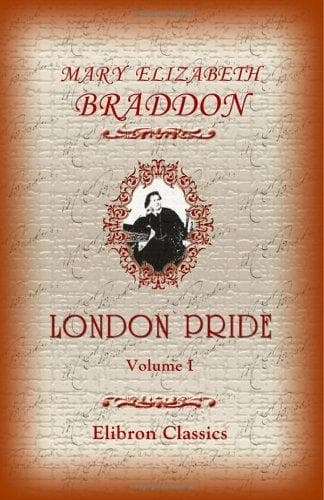
London Pride, Or, When the World Was YoungerBraddon, M. E. (Mary Elizabeth)
History
London Pride, Or, When the World Was Younger
Braddon, M. E. (Mary Elizabeth)
Great Britain -- History -- Charles II, 1660-1685 -- Fiction; London (England) -- Fiction
“Infamous! Who told you she is infamous? Your innocency should be
ignorant of such trumpery tittle-tattle. And one can be civil without
consorting, as you call it.”
Angela took her sister’s reckless speech for mere sportiveness.
Hyacinth might be careless and ignorant of business, but his lordship
doubtless knew the extent of his income, and was too grave and
experienced a personage to be a spendthrift. He had confessed to seven
and thirty, which to the girl of twenty seemed serious middle-age.
There were musicians in her ladyship’s household—youths who played lute
and viol, and sang the dainty, meaningless songs of the latest
ballad-mongers very prettily. The warm weather, which had a bad effect
upon the bills of mortality, was so far advantageous that it allowed
these gentlemen to sing in the garden while the family were at supper,
or on the river while the family were taking their evening airing.
Their newest performance was an arrangement of Lord Dorset’s lines—“To
all you ladies now on land,” set as a round. There could scarcely be
anything prettier than the dying fall of the refrain that ended every
verse:—
“With a fa, la, la,
Perhaps permit some happier man
To kiss your hand or flirt your fan,
With a fa, la, la.”
The last lines died away in the distance of the moonlit garden, as the
singers slowly retired, while Henri de Malfort illustrated that final
couplet with Hyacinth’s fan, as he sat beside her.
“Music, and moonlight, and a garden. You might fancy yourself amidst
the grottoes and terraces of St. Germain.”
“I note that whenever there is anything meritorious in our English life
Malfort is reminded of France, and when he discovers any obnoxious
feature in our manners or habits he expatiates on the vast difference
between the two nations,” said his lordship.
“Dear Fareham, I am a human being. When I am in England I remember all
I loved in my own country. I must return to it before I shall
understand the worth of all I leave here—and the understanding may be
bitter. Call your singers back, and let us have those two last verses
again. ’Tis a fine tune, and your fellows perform it with sweetness and
brio.”
The song was new. The victory which it celebrated was fresh in the
minds of men. The disgrace of later Dutch experiences—the ships in the
Nore ravaging and insulting—was yet to come. England still believed her
floating castles invincible.
Public-domain text, read in full here on John Shaqi.
Reviews
Reviews
No reviews yet
Be the first to share your thoughts on this work.
Elsewhere in the archive
Join the Discussion
Join the discussion
Sign in to leave a comment or review.
Sign InorCreate an account