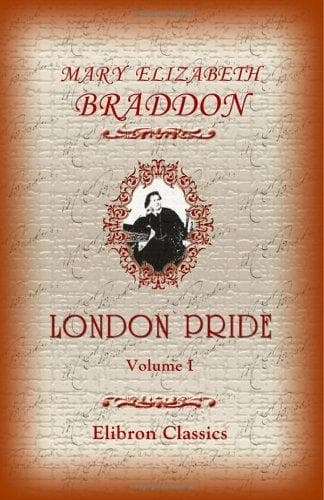
London Pride, Or, When the World Was YoungerBraddon, M. E. (Mary Elizabeth)
History
London Pride, Or, When the World Was Younger
Braddon, M. E. (Mary Elizabeth)
Great Britain -- History -- Charles II, 1660-1685 -- Fiction; London (England) -- Fiction
“They were like sheep before the shearer. They were dumb. Great God!
can I ever forget that sea of white faces under the grey winter sky, or
the universal groan that went up to heaven when the stroke of the axe
sounded on the block, and men knew that the murder of their King was
consummated; and when that anointed head with its grey hairs, whitened
with sorrow, mark you, not with age, was lifted up, bloody, terrible,
and proclaimed the head of a traitor? Ah, reverend mother, ten such
moments will age a man by ten years. Was it not the most portentous
tragedy which the earth has ever seen since He who was both God and Man
died upon Calvary? Other judicial sacrifices have been, but never of a
victim as guiltless and as noble. Had you but seen the calm beauty of
his countenance as he turned it towards the people! Oh, my King, my
master, my beloved friend, when shall I see that face in Paradise, with
the blood washed from that royal brow, with the smile of the redeemed
upon those lips!”
He flung himself into a chair, covered his face with those
weather-stained hands, which had broadened by much grasping of sword
and pistol, pike and gun, and sobbed aloud, with a fierce passion that
convulsed the strong muscular frame. Of all the King’s servants this
one had been the most steadfast, was marked in the black book of the
Parliament as a notorious Malignant. From the raising of the standard
on the castle-hill at Nottingham—in the sad evening of a tempestuous
day, with but scanty attendance, and only evil presages—to the treaty
at Newport, and the prison on the low Hampshire coast, this man had
been his master’s constant companion and friend; fighting in every
battle, cleaving to King and Prince in spite of every opposing
influence, carrying letters between father and son in the teeth of the
enemy, humbling himself as a servant, and performing menial labours, in
those latter days of bitterness and outrage, when all courtly
surroundings were denied the fallen monarch.
And now he mourned his martyred King more bitterly than he would have
mourned his own brother.
The little girl slipped from the reverend mother’s lap, and ran across
the room to her father.
“Don’t cry, father!” she murmured, with her own eyes streaming. “It
hurts me to see you.”
Public-domain text, read in full here on John Shaqi.
Reviews
Reviews
No reviews yet
Be the first to share your thoughts on this work.
Join the Discussion
Join the discussion
Sign in to leave a comment or review.
Sign InorCreate an account