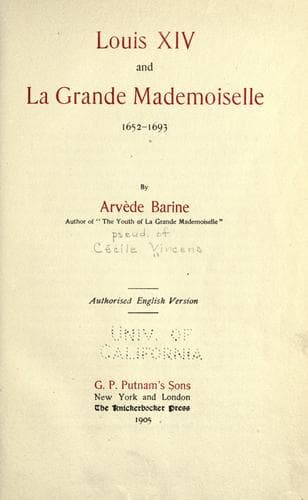
Louis XIV and La Grande Mademoiselle, 1652-1693Barine, Arvède
History
Louis XIV and La Grande Mademoiselle, 1652-1693
Barine, Arvède
Louis XIV, King of France, 1638-1715; Montpensier, Anne-Marie-Louise d'Orléans, duchesse de, 1627-1693
The spectacle which awaited it has been described a hundred times. A
poor little dishevelled figure, pathetic from suffering, and already
drawn by the approach of the dying agony, lay upon the bed. The
unfastened chemise permitted her emaciation to be seen, and she was so
pale that if it had not been for her cries it might have been thought
that the end had already come. We know through Mme. de La Fayette[231]
that the first sentiments of the spectators had been those of pity,
natural in such a case, and here doubled by the sight of the frightful
sufferings and the gentleness of this young and charming being in the
presence of death. The state of Madame had touched even her husband, so
embittered against her by her frivolities, and only the sound of
"weeping was heard in the chamber."
With the entrance of the sovereigns and their suite the aspect of the
room was at once altered. Louis was indeed sincerely affected,
Mademoiselle much moved, and many of the others felt "that they were
losing with Madame all the joy, all the agreeableness, all the pleasures
of the Court."[232] But egotism and intrigue marched on the heels of
their Majesties. Even while weeping, each began to dream over the
consequences of this death. Who would inherit the prestige of Madame?
Whom would Monsieur marry? Would it be the Grande Mademoiselle? How
would this affect the interests of each? The dying woman felt a sudden
chill in the atmosphere. "She perceived with pain the tranquillity of
every one," reports Mademoiselle, "and I have never seen any sight so
pitiable as her state when she realised the real attitude of those
surrounding her bed. The crowd kept on talking, moving about in the
room, almost laughing."
Monsieur was only "astonished" at what was happening. Mademoiselle
having urged him to send for a priest, he said, "Whom shall we call?
Whose name will appear well in the _Gazette_?" This preoccupation truly
reveals Monsieur.
After the departure of the King, who took away others in his train, the
scene again changed. Monsieur had sent for Bossuet, who, in a letter to
one of his brothers, has related details of these last hours. To judge
from this letter, it appears that the presence of the priest at the
bedside of Madame turned all minds from terrestrial preoccupations and
banished all thoughts except those impressed by the grandeur of death.
Madame herself gave the example, proving with her last sigh that she
felt she was accomplishing "the most important action of life."[233] "I
found her fully conscious," said Bossuet, "speaking and acting without
ostentation, without effort, without violence; but so well, so suitably,
with so much courage and piety, that I was completely overcome." Thus
God had the last word!
Public-domain text, read in full here on John Shaqi.
Reviews
Reviews
No reviews yet
Be the first to share your thoughts on this work.
Elsewhere in the archive
Join the Discussion
Join the discussion
Sign in to leave a comment or review.
Sign InorCreate an account