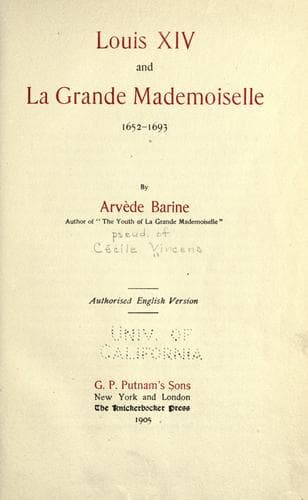
Louis XIV and La Grande Mademoiselle, 1652-1693Barine, Arvède
History
Louis XIV and La Grande Mademoiselle, 1652-1693
Barine, Arvède
Louis XIV, King of France, 1638-1715; Montpensier, Anne-Marie-Louise d'Orléans, duchesse de, 1627-1693
On returning to Versailles, the Queen quietly ate her supper.
Mademoiselle perceived Lauzun among those present. "In rising from
table, I said to him, 'This is very disconcerting.' He replied, 'Very,
and I am afraid that it may spoil our plans.' I responded, 'Ah, no. No
matter what may happen.'"
The poor woman could not sleep during the night: how rid herself of
Monsieur, if the King should wish "the marriage"? At six in the morning,
word came from Saint-Cloud that Madame was dead. "At this news,"
continues Mademoiselle, "the King resolved to take medicine," and
Mademoiselle, arriving with the Queen, found him in a dressing-gown,
weeping bitterly over the loss of Madame, and very tenderly pitying his
own woe. He said to Mademoiselle: "Come, watch me take medicine; let us
make no more fuss; better act as I am doing." After his draught he
retired, and the morning was passed in his bedchamber speaking of the
dead.
In the afternoon, the King dressed and went to consult Mademoiselle, as
the great authority in matters of Court etiquette, upon the proper
arrangements for the funeral ceremony. After these details had been
discussed, the King spoke the word she was expecting and dreading: "'My
cousin, here is a vacant place, will you fill it?' I became pale as
death, and said, 'You are the master, your wish is mine.' He urged me to
speak frankly. I said, 'I can say nothing about this.' 'But have you any
aversion to the idea?' I was silent; he went on, 'I will further the
affair and report to you.'"
In the salons, the crowd of courtiers was busily engaged in remarrying
Monsieur. The question was, "To whom?" and every one looked at the
Grande Mademoiselle. Lauzun bore the situation like a man of spirit,
without troubling himself with useless regrets or feigning a loving
despair which was very foreign to his nature. His manner was free, very
gay, too easy to please Mademoiselle when he congratulated her and
refused to listen to her protestations that "it would never be." "The
King said that he wished you would marry Monsieur; it will be necessary
to obey." He besought her not to hesitate, and dilated on the joys of
grandeur, and the happiness she might have with Monsieur. She responded,
"I am more than fifteen, and I do not propose to accept a life fit only
for children."
Of all the honours attached to the rank of sister-in-law to the King,
one alone appealed to her,--that she would then have a good place in the
royal carriage, instead of being always on the basket seat, and she
represented to Lauzun that the "good place would not long remain
vacant." It would be assigned to the children of the King as soon as
they should be grown up. Once he added: "The past must be forgotten. I
remember nothing of what you have told me; I have lately forgotten all."
Public-domain text, read in full here on John Shaqi.
Reviews
Reviews
No reviews yet
Be the first to share your thoughts on this work.
Elsewhere in the archive
Join the Discussion
Join the discussion
Sign in to leave a comment or review.
Sign InorCreate an account