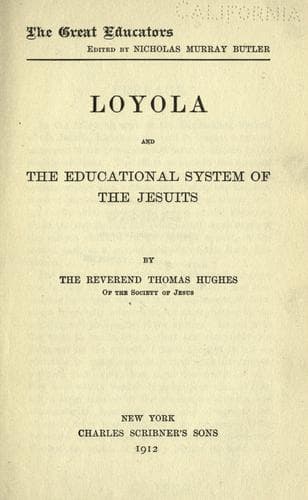
Loyola and the Educational System of the JesuitsHughes, Thomas
History
Loyola and the Educational System of the Jesuits
Hughes, Thomas
Education -- History; Ignatius, of Loyola, Saint, 1491-1556; Jesuits
This was not to develop a false self-love in young hearts; which
would have been little to the purpose with religious teachers. "Let
them root out from themselves, in every possible way, self-love and
the craving for vain glory," says the oldest code of school rules
in the Society, probably from the pen of Father Peter Canisius
himself.[81] What is appealed to, is the spirit of emulation, and
that by a world of industries; which, disguising the aridity of
the work to be gone through, spurs young students on to excellence
in whatever they undertake, and rewards the development of natural
energies with the natural luxury of confessedly doing well. In the
dry course of virtue and learning, satisfaction of this kind is not
excited in the young, without a sign, a token, a badge, a prize. Then
they feel happy in having done well, however little they enjoyed the
labor before. Honorable distinctions well managed, sometimes a share
in the unimportant direction of the class, brilliancy of success in
single combat on the field of knowledge, of memory, or of intellectual
self-reliance, the ordered discrimination of habitual merit, all
these means and many others keep the little army in a condition of
mental activity, and sometimes of suspense; "and if not all are
victorious, all at least have traversed the strengthening probation of
struggle."[82]
In all the courses of Belles-lettres, Rhetoric, Philosophy, and
Theology, the institutions called "Academies" gather into select
bodies the most talented and exemplary of the students. The young
_littérateurs_, or philosophers, having their own officials, special
reunions, and archives, hold their public sessions in presence of the
other students, the Masters, and illustrious personages invited for the
occasion. In their poems, speeches, dialogues, they discuss, declaim,
and rise to great thoughts, and to the conception of great deeds.
Public-domain text, read in full here on John Shaqi.
Reviews
Reviews
No reviews yet
Be the first to share your thoughts on this work.
Join the Discussion
Join the discussion
Sign in to leave a comment or review.
Sign InorCreate an account