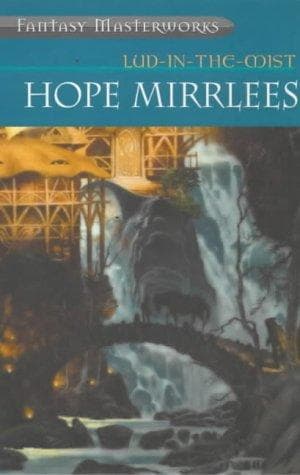
Fairies -- Fiction; Fantasy fiction; Imaginary places -- Fiction
All these things, however, were familiar sights to any Ludite. But
on the third day (for Ranulph's sake they were taking the journey in
easy stages) things began to look different--especially the trees;
for instead of acacias, beeches, and willows--familiar living things
for ever murmuring their secret to themselves--there were pines and
liege-oaks and olives. Inanimate works of art they seemed at first and
Ranulph exclaimed, "Oh, look at the funny trees! They are like the old
statues of dead people in the Fields of Grammary!"
But, as well, they were like an old written tragedy. For if human, or
superhuman, experience, and the tragic clash of personality can be
expressed by plastic shapes, then one might half believe that these
tortured trees had been bent by the wind into the spiritual shape of
some old drama.
Pines and olives, however, cannot grow far away from the sea. And
surely the sea lay to the east of Lud-in-the-Mist, and with each mile
they were getting further away from it? It was the sea beyond the Hills
of the Elfin Marches--the invisible sea of Fairyland--that caused these
pines and olives to flourish.
* * * * *
It was late in the afternoon when they reached the village of
Swan-on-the-Dapple--a score of houses straggling round a triangle of
unreclaimed common, on which grew olives and stunted fruit trees, and
which was used as the village rubbish heap. In the distance were the
low, pine-covered undulations of the Debatable Hills--a fine unchanging
background for the changing colours of the seasons. Indeed, they lent a
dignity and significance to everything that grew, lay, or was enacted,
against them; so that the little children in their blue smocks who were
playing among the rubbish on the dingy common as our cavalcade rode
past, seemed to be performing against the background of Destiny some
tremendous action, similar to the one expressed by the shapes of the
pines and olives.
When they had left the village, they took a cart-track that branched
off from the high-road to the right. It led into a valley, the gently
sloping sides of which were covered with vineyards and corn-fields.
Sometimes their path led through a little wood of liege-oaks with
trunks, where the bark had been stripped, showing as red as blood, and
everywhere there were short, wiry, aromatic shrubs, beset by myriads of
bees.
Every minute the hills seemed to be drawing nearer, and the pines with
which they were covered began to stand out from the carpet of heath in
a sort of coagulated relief, so that they looked like a thick green
scum of watercress on a stagnant purple pond.
At last they reached the farm--a fine old manor-house, standing among
a cluster of red-roofed barns, and supported, heraldically, on either
side by two magnificent plane-trees, with dappled trunks of tremendous
girth.
Public-domain text, read in full here on John Shaqi.
Reviews
Reviews
No reviews yet
Be the first to share your thoughts on this work.
Join the Discussion
Join the discussion
Sign in to leave a comment or review.
Sign InorCreate an account