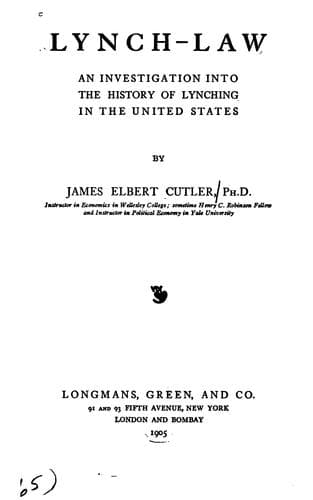
Lynch-law; an investigation into the history of lynching in the United StatesCutler, James Elbert
Philosophy
Lynch-law; an investigation into the history of lynching in the United States
Cutler, James Elbert
Lynching -- United States
So long as the negro race was in bondage to the white race, then, not
only were the inciting causes of negro lynching largely held in check,
but such provisions were made for the trial and punishment of miscreant
slaves that resort to lynching was wholly without justification. Even
after the anti-slavery agitation had begun in the early thirties and
summary measures were occasionally taken against negro offenders,
justification was claimed on the ground of the incendiary publications
and utterances of the abolitionists rather than the specific crimes
committed by the blacks. The fact that during the period of slavery, in
the case of the raping of white women, as well as of other crimes, the
law was generally allowed to take its course, goes far toward refuting
the argument that lynching is necessary to repress crime among the
negroes in the South to-day.
History has shown it to be a fundamental mistake to assume that illegal
and summary procedure against a particular offense will deter from that
offense. As one writer has very forcibly said, if an argument based on
this assumption were put into plain language, it would read: “Let past
crime be met with present crime in order that future crime may be
prevented.”[266] All revengeful dealing with crime has increased crime
rather than lessened it. The only deterrent from crime that men have
found is the prompt and certain and solemn punishment by law, sustained
and supported by a confident, unyielding body of public opinion.[267]
The attempt to justify the lynching of negroes on the plea that lynching
for rape committed upon white women is necessary to repress that crime
is without support in any respect. Frederick Douglass lessened the force
of this plea very considerably when he pointed out that there have been
three distinct excuses offered for the persecution of negroes in the
United States. First, it was because of insurrections; then, it was the
fear of negro domination and supremacy; then, when neither of these was
any longer defensible as an excuse, the crime of assault upon white
women was put forward to justify their persecution.[268] The fact that
not more than thirty-four per cent of the negroes lynched in the last
twenty-two years have been lynched for that crime likewise vitiates such
a plea of justification. The facts as known indicate that lynching for
that crime, instead of having a repressive influence, has directly
stimulated its perpetration. Assaults on white women have occurred again
and again immediately following a lynching for such crime, and they have
so occurred in the same neighborhood where the lynching took place.[269]
It has been publicly stated that in one instance a negro who had
witnessed a lynching for this crime actually committed an assault on his
way home.[270]
Public-domain text, read in full here on John Shaqi.
Reviews
Reviews
No reviews yet
Be the first to share your thoughts on this work.
Elsewhere in the archive
Join the Discussion
Join the discussion
Sign in to leave a comment or review.
Sign InorCreate an account