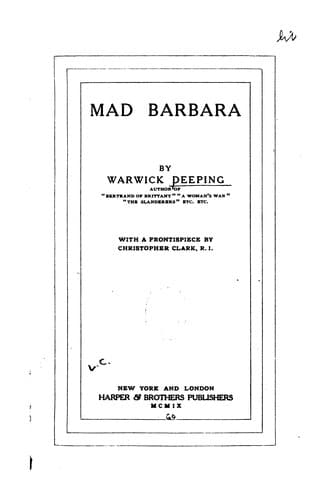
Great Britain -- History -- Charles II, 1660-1685 -- Fiction
Probably the secret of all this crumbling up of courage lay in the
nature of the man’s very self. Vanity may be a rare cement in the walls
of a man’s fortune so long as there is no corroding acid in the air. And
Stephen Gore’s genius had rested upon his vanity, not in his dress
alone, but in all those attributes that a man desires to see given to
his splendor. His vital force had been fed upon the pleasant things of
life; he was a self-inflated, artificial creature, who was strong so
long as he could be flattered. But, like an orthodox believer smitten to
the heart with doubt, he began to find his convictions dissolving into
chaos, and the adulations of self-worship becoming a mockery despite his
efforts to believe them real.
Voices—sharp, sneering, sardonic voices that he had had the strength to
stifle of old—began to cut him with his own cleverness, using the very
gibes against him that he had used in the gay salons to his own glory.
For when a cynic falls into misfortune he is likely to discover that he
has nurtured a devil that will use its claws upon the master who has
reared it.
Stephen Gore had often said that—
“A man who begins to think his virtue shabby is a man who cannot afford
to pay his tailor—the priest.”
“Never confess to yourself any cause for shame, or you will soon find
your feet in the mire.”
“Men may regret; only women and fools repent.”
“Consciousness is life; therefore a man ought to suffer himself to be
conscious only of pleasant things.”
And my Lord of Gore was having a wider consciousness forced upon him in
the narrow world of that ruined house. And where were the studied
pleasantries of consciousness? A fine gentleman feeding on salt beef and
onions, scraping his own fire together, and living in devout horror of a
prosaic thing called death. So much so that he was possessed by a
species of “morsomania” grim enough to prevent him seeing the cynically
comic side of his own condition.
XLI
A man in love is not supposed to think of his lady’s clothes, but only
of the brightness of her eyes and the beauty of her body, the way her
lips curve when she smiles, and how she may look coy or mischievous, or
sad and silent with some mysterious desire. Yet there is a delight in
practical things when shoes are for certain feet, and the petticoats to
hide a certain comely pair of ankles. John Gore had inquired of Mrs.
Winnie as to the shops in Battle Town, and qualified her enthusiasm
somewhat to himself when she vowed that Mr. Bannister’s mercery and
haberdashery shop might have served the Queen.
Public-domain text, read in full here on John Shaqi.
Reviews
Reviews
No reviews yet
Be the first to share your thoughts on this work.
Elsewhere in the archive
Join the Discussion
Join the discussion
Sign in to leave a comment or review.
Sign InorCreate an account