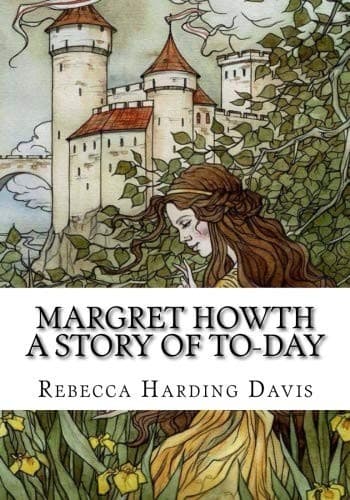
Margret Howth: A Story of To-dayDavis, Rebecca Harding
General
Margret Howth: A Story of To-day
Davis, Rebecca Harding
Fiction
Lois did like to see it; sat up, her face quite flushed to see how
nicely it fitted, and stroked back Jenny's soft hair under the veil.
And Jenny, being a warm-hearted little thing, broke into a sobbing fit,
saying that it spoiled it all to have Lois gone.
"Don't muss your veil, child," said Mrs. Polston.
But Jenny cried on, hiding her face in Lois's skinny hand, until Sam
Polston came in, when she grew quiet and shy. The poor deformed girl
lay watching them, as they talked. Very pretty Jenny looked, with her
blue eyes and damp pink cheeks; and it was a manly, grave love in Sam's
face, when it turned to her. A different love from any she had known:
better, she thought. It could not be helped; but it WAS better.
After they were gone, she lay a long time quiet, with her hand over her
eyes. Forgive her! she, too, was a woman. Ah, it may be there are
more wrongs that shall be righted yonder in the To-Morrow than are set
down in your theology!
And so it was, that, as she drew nearer to this To-Morrow, the brain of
the girl grew clearer,--struggling, one would think, to shake off
whatever weight had been put on it by blood or vice or poverty, and
become itself again. Perhaps, even in her cheerful, patient life,
there had been hours when she had known the wrongs that had been done
her, known how cruelly the world had thwarted her; her very keen
insight into whatever was beautiful or helpful may have made her see
her own mischance, the blank she had drawn in life, more bitterly. She
did not see it bitterly now. Death is honest; all things grew clear to
her, going down into the valley of the shadow; so, wakening to the
consciousness of stifled powers and ungiven happiness, she saw that the
fault was not hers, nor His who had appointed her lot; He had helped
her to bear it,--bearing worse himself. She did not say once, "I might
have been," but day by day, more surely, "I shall be." There was not a
tear on the homely faces turning from her bed, not a tint of colour in
the flowers they brought her, not a shiver of light in the ashy sky,
that did not make her more sure of that which was to come. More loving
she grew, as she went away from them, the touch of her hand more
pitiful, her voice more tender, if such a thing could be,--with a look
in her eyes never seen there before. Old Yare pointed it out to Mrs.
Polston one day.
"My girl's far off frum us," he said, sobbing in the kitchen,--"my
girl's far off now."
It was the last night of the year that she died. She was so much
better that they all were quite cheerful. Kitts went away as it grew
dark, and she bade him wrap up his throat with such a motherly
dogmatism that they all laughed at her; she, too, with the rest.
"I'll make you a New-Year's call," he said, going out; and she called
out that she should be sure to expect him.
Public-domain text, read in full here on John Shaqi.
Reviews
Reviews
No reviews yet
Be the first to share your thoughts on this work.
Elsewhere in the archive
Join the Discussion
Join the discussion
Sign in to leave a comment or review.
Sign InorCreate an account