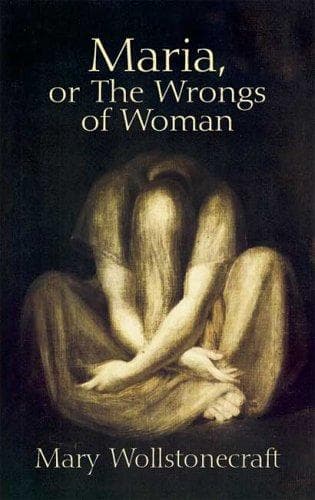
Maria; Or, The Wrongs of WomanWollstonecraft, Mary
General
Maria; Or, The Wrongs of Woman
Wollstonecraft, Mary
Autobiographical fiction; Feminist fiction; Women -- Fiction
Fatigued by an endless rotation of thought and wild alarms, she looked
like a spectre, when Jemima entered in the morning; especially as her
eyes darted out of her head, to read in Jemima’s countenance, almost as
pallid, the intelligence she dared not trust her tongue to demand.
Jemima put down the tea-things, and appeared very busy in arranging the
table. Maria took up a cup with trembling hand, then forcibly
recovering her fortitude, and restraining the convulsive movement which
agitated the muscles of her mouth, she said, “Spare yourself the pain
of preparing me for your information, I adjure you!—My child is dead!”
Jemima solemnly answered, “Yes;” with a look expressive of compassion
and angry emotions. “Leave me,” added Maria, making a fresh effort to
govern her feelings, and hiding her face in her handkerchief, to
conceal her anguish—“It is enough—I know that my babe is no more—I will
hear the particulars when I am”—calmer, she could not utter; and
Jemima, without importuning her by idle attempts to console her, left
the room.
Plunged in the deepest melancholy, she would not admit Darnford’s
visits; and such is the force of early associations even on strong
minds, that, for a while, she indulged the superstitious notion that
she was justly punished by the death of her child, for having for an
instant ceased to regret her loss. Two or three letters from Darnford,
full of soothing, manly tenderness, only added poignancy to these
accusing emotions; yet the passionate style in which he expressed, what
he termed the first and fondest wish of his heart, “that his affection
might make her some amends for the cruelty and injustice she had
endured,” inspired a sentiment of gratitude to heaven; and her eyes
filled with delicious tears, when, at the conclusion of his letter,
wishing to supply the place of her unworthy relations, whose want of
principle he execrated, he assured her, calling her his dearest girl,
“that it should henceforth be the business of his life to make her
happy.”
He begged, in a note sent the following morning, to be permitted to see
her, when his presence would be no intrusion on her grief, and so
earnestly intreated to be allowed, according to promise, to beguile the
tedious moments of absence, by dwelling on the events of her past life,
that she sent him the memoirs which had been written for her daughter,
promising Jemima the perusal as soon as he returned them.
CHAPTER 7
“Addressing these memoirs to you, my child, uncertain whether I shall
ever have an opportunity of instructing you, many observations will
probably flow from my heart, which only a mother—a mother schooled in
misery, could make.
Public-domain text, read in full here on John Shaqi.
Reviews
Reviews
No reviews yet
Be the first to share your thoughts on this work.
Join the Discussion
Join the discussion
Sign in to leave a comment or review.
Sign InorCreate an account