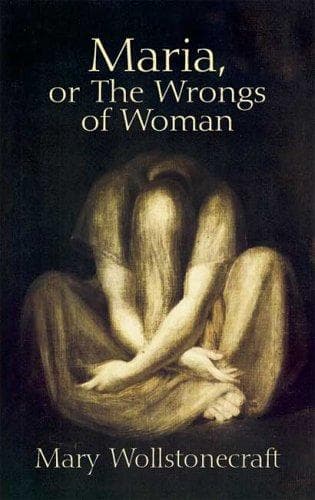
Maria; Or, The Wrongs of WomanWollstonecraft, Mary
General
Maria; Or, The Wrongs of Woman
Wollstonecraft, Mary
Autobiographical fiction; Feminist fiction; Women -- Fiction
“So completely was I deceived by these shows of friendship (nay, I
believe, according to his interpretation, Mr. S—— really was my friend)
that I began to consult him respecting the best mode of retrieving my
husband’s character: it is the good name of a woman only that sets to
rise no more. I knew not that he had been drawn into a whirlpool, out
of which he had not the energy to attempt to escape. He seemed indeed
destitute of the power of employing his faculties in any regular
pursuit. His principles of action were so loose, and his mind so
uncultivated, that every thing like order appeared to him in the shape
of restraint; and, like men in the savage state, he required the strong
stimulus of hope or fear, produced by wild speculations, in which the
interests of others went for nothing, to keep his spirits awake. He one
time professed patriotism, but he knew not what it was to feel honest
indignation; and pretended to be an advocate for liberty, when, with as
little affection for the human race as for individuals, he thought of
nothing but his own gratification. He was just such a citizen, as a
father. The sums he adroitly obtained by a violation of the laws of his
country, as well as those of humanity, he would allow a mistress to
squander; though she was, with the same _sang froid_, consigned, as
were his children, to poverty, when another proved more attractive.
“On various pretences, his friend continued to visit me; and, observing
my want of money, he tried to induce me to accept of pecuniary aid; but
this offer I absolutely rejected, though it was made with such
delicacy, I could not be displeased.
“One day he came, as I thought accidentally, to dinner. My husband was
very much engaged in business, and quitted the room soon after the
cloth was removed. We conversed as usual, till confidential advice led
again to love. I was extremely mortified. I had a sincere regard for
him, and hoped that he had an equal friendship for me. I therefore
began mildly to expostulate with him. This gentleness he mistook for
coy encouragement; and he would not be diverted from the subject.
Perceiving his mistake, I seriously asked him how, using such language
to me, he could profess to be my husband’s friend? A significant sneer
excited my curiosity, and he, supposing this to be my only scruple,
took a letter deliberately out of his pocket, saying, ‘Your husband’s
honour is not inflexible. How could you, with your discernment, think
it so? Why, he left the room this very day on purpose to give me an
opportunity to explain myself; _he_ thought me too timid—too tardy.
Public-domain text, read in full here on John Shaqi.
Reviews
Reviews
No reviews yet
Be the first to share your thoughts on this work.
Elsewhere in the archive
Join the Discussion
Join the discussion
Sign in to leave a comment or review.
Sign InorCreate an account