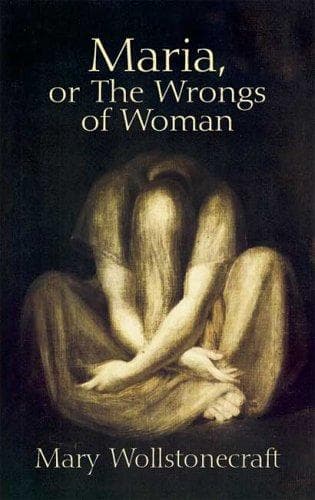
Maria; Or, The Wrongs of WomanWollstonecraft, Mary
General
Maria; Or, The Wrongs of Woman
Wollstonecraft, Mary
Autobiographical fiction; Feminist fiction; Women -- Fiction
“When left alone, I was a moment or two before I could recollect
myself—One scene had succeeded another with such rapidity, I almost
doubted whether I was reflecting on a real event. ‘Was it possible? Was
I, indeed, free?’—Yes; free I termed myself, when I decidedly perceived
the conduct I ought to adopt. How had I panted for liberty—liberty,
that I would have purchased at any price, but that of my own esteem! I
rose, and shook myself; opened the window, and methought the air never
smelled so sweet. The face of heaven grew fairer as I viewed it, and
the clouds seemed to flit away obedient to my wishes, to give my soul
room to expand. I was all soul, and (wild as it may appear) felt as if
I could have dissolved in the soft balmy gale that kissed my cheek, or
have glided below the horizon on the glowing, descending beams. A
seraphic satisfaction animated, without agitating my spirits; and my
imagination collected, in visions sublimely terrible, or soothingly
beautiful, an immense variety of the endless images, which nature
affords, and fancy combines, of the grand and fair. The lustre of these
bright picturesque sketches faded with the setting sun; but I was still
alive to the calm delight they had diffused through my heart.
“There may be advocates for matrimonial obedience, who, making a
distinction between the duty of a wife and of a human being, may blame
my conduct.—To them I write not—my feelings are not for them to
analyze; and may you, my child, never be able to ascertain, by
heart-rending experience, what your mother felt before the present
emancipation of her mind!
“I began to write a letter to my father, after closing one to my uncle;
not to ask advice, but to signify my determination; when I was
interrupted by the entrance of Mr. Venables. His manner was changed.
His views on my uncle’s fortune made him averse to my quitting his
house, or he would, I am convinced, have been glad to have shaken off
even the slight restraint my presence imposed on him; the restraint of
showing me some respect. So far from having an affection for me, he
really hated me, because he was convinced that I must despise him.
“He told me, that ‘As I now had had time to cool and reflect, he did
not doubt but that my prudence, and nice sense of propriety, would lead
me to overlook what was passed.’
“‘Reflection,’ I replied, ‘had only confirmed my purpose, and no power
on earth could divert me from it.’
“Endeavouring to assume a soothing voice and look, when he would
willingly have tortured me, to force me to feel his power, his
countenance had an infernal expression, when he desired me, ‘Not to
expose myself to the servants, by obliging him to confine me in my
apartment; if then I would give my promise not to quit the house
precipitately, I should be free—and—.’ I declared, interrupting him,
‘that I would promise nothing. I had no measures to keep with him—I was
resolved, and would not condescend to subterfuge.’
Public-domain text, read in full here on John Shaqi.
Reviews
Reviews
No reviews yet
Be the first to share your thoughts on this work.
Elsewhere in the archive
Join the Discussion
Join the discussion
Sign in to leave a comment or review.
Sign InorCreate an account