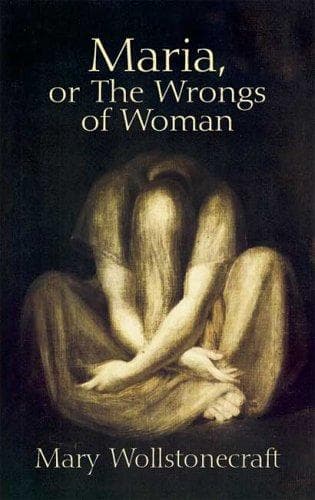
Maria; Or, The Wrongs of WomanWollstonecraft, Mary
General
Maria; Or, The Wrongs of Woman
Wollstonecraft, Mary
Autobiographical fiction; Feminist fiction; Women -- Fiction
“Woman,” interrupted a sepulchral voice, “what have I to do with
thee?”—Still he grasped her hand, muttering a curse.
“No, no; you have nothing to do with me,” she exclaimed, “this is a
moment of life and death!”—
With supernatural force she broke from him, and, throwing her arms
round Jemima, cried, “Save me!” The being, from whose grasp she had
loosed herself, took up a stone as they opened the door, and with a
kind of hellish sport threw it after them. They were out of his reach.
When Maria arrived in town, she drove to the hotel already fixed on.
But she could not sit still—her child was ever before her; and all that
had passed during her confinement, appeared to be a dream. She went to
the house in the suburbs, where, as she now discovered, her babe had
been sent. The moment she entered, her heart grew sick; but she
wondered not that it had proved its grave. She made the necessary
enquiries, and the church-yard was pointed out, in which it rested
under a turf. A little frock which the nurse’s child wore (Maria had
made it herself) caught her eye. The nurse was glad to sell it for
half-a-guinea, and Maria hastened away with the relic, and, reentering
the hackney-coach which waited for her, gazed on it, till she reached
her hotel.
She then waited on the attorney who had made her uncle’s will, and
explained to him her situation. He readily advanced her some of the
money which still remained in his hands, and promised to take the whole
of the case into consideration. Maria only wished to be permitted to
remain in quiet—She found that several bills, apparently with her
signature, had been presented to her agent, nor was she for a moment at
a loss to guess by whom they had been forged; yet, equally averse to
threaten or intreat, she requested her friend [the solicitor] to call
on Mr. Venables. He was not to be found at home; but at length his
agent, the attorney, offered a conditional promise to Maria, to leave
her in peace, as long as she behaved with propriety, if she would give
up the notes. Maria inconsiderately consented—Darnford was arrived, and
she wished to be only alive to love; she wished to forget the anguish
she felt whenever she thought of her child.
They took a ready furnished lodging together, for she was above
disguise; Jemima insisting on being considered as her house-keeper, and
to receive the customary stipend. On no other terms would she remain
with her friend.
Public-domain text, read in full here on John Shaqi.
Reviews
Reviews
No reviews yet
Be the first to share your thoughts on this work.
Elsewhere in the archive
Join the Discussion
Join the discussion
Sign in to leave a comment or review.
Sign InorCreate an account