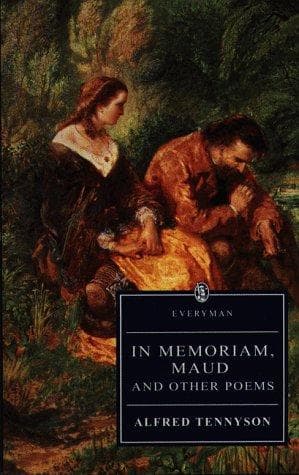
Maud, and Other PoemsTennyson, Alfred Tennyson, Baron
General
Maud, and Other Poems
Tennyson, Alfred Tennyson, Baron
English poetry -- 19th century
3.
A grand political dinner
To the men of many acres,
A gathering of the Tory,
A dinner and then a dance
For the maids and marriage-makers,
And every eye but mine will glance
At Maud in all her glory.
4.
For I am not invited,
But, with the Sultan's pardon,
I am all as well delighted,
For I know her own rose-garden,
And mean to linger in it
Till the dancing will be over;
And then, oh then, come out to me
For a minute, but for a minute,
Come out to your own true lover.
That your true lover may see
Your glory also, and render
All homage to his own darling,
Queen Maud in all her splendour.
XXI.
Rivulet crossing my ground,
And bringing me down from the Hall
This garden-rose that I found,
Forgetful of Maud and me,
And lost in trouble and moving round
Here at the head of a tinkling fall,
And trying to pass to the sea;
Rivulet, born at the Hall,
My Maud has sent it by thee
(If I read her sweet will right)
On a blushing mission to me,
Saying in odour and colour, 'Ah, be
Among the roses to-night.'
XXII.
1.
Come into the garden, Maud,
For the black bat, night, has flown,
Come into the garden, Maud,
I am here at the gate alone;
And the woodbine spices are wafted abroad,
And the musk of the roses blown.
2.
For a breeze of morning moves,
And the planet of Love is on high,
Beginning to faint in the light that she loves
On a bed of daffodil sky,
To faint in the light of the sun she loves.
To faint in his light, and to die.
3.
All night have the roses heard
The flute, violin, bassoon;
All night has the casement jessamine stirr'd
To the dangers dancing in tune;
Till a silence fell with the waking bird,
And a hush with the setting moon.
4.
I said to the lily, 'There is but one
With whom she has heart to be gay.
When will the dancers leave her alone?
She is weary of dance and play.'
Now half to the setting moon are gone,
And half to the rising day;
Low on the sand and loud on the stone
The last wheel echoes away.
5.
I said to the rose, 'The brief night goes
In babble and revel and wine.
young lord-lover, what sighs are those,
For one that will never be thine?
But mine, but mine,' so I sware to the rose,
'For ever and ever, mine.'
6.
And the soul of the rose went into my blood,
As the music clash'd in the hall;
And long by the garden lake I stood.
For I heard your rivulet fall
From the lake to the meadow and on to the wood,
Our wood, that is dearer than all;
7.
From the meadow your walks have left so sweet
That whenever a March-wind sighs
He sets the jewel-print of your feet
In violets blue as your eyes,
To the woody hollows in which we meet
And the valleys of Paradise.
8.
The slender acacia would not shake
One long milk-bloom on the tree;
The white lake-blossom fell into the lake,
As the pimpernel dozed on the lea;
But the rose was awake all night for your sake,
Knowing your promise to me;
The lilies and roses were all awake.
They sigh'd for the dawn and thee.
Public-domain text, read in full here on John Shaqi.
Reviews
Reviews
No reviews yet
Be the first to share your thoughts on this work.
Join the Discussion
Join the discussion
Sign in to leave a comment or review.
Sign InorCreate an account