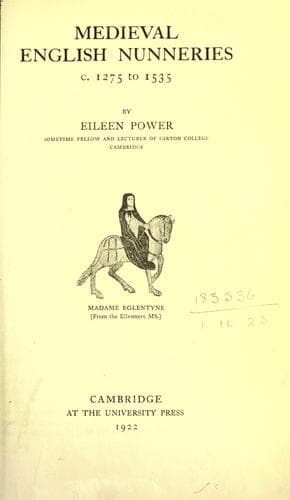
Medieval English Nunneries c. 1275 to 1535Power, Eileen
History
Medieval English Nunneries c. 1275 to 1535
Power, Eileen
Convents -- England; Monastic and religious life of women -- History
Even when the right of nomination was confined to one occasion, it seems
to have been generally resented and frequently resisted. The reason for
resistance lay in the fact that the house was forced to support another
inmate without the hope of receiving the donation of land or rents, which
medieval fathers gave to the convents in which their daughters took the
veil; and as the dowry system became more and more common, the hardship
of having to receive a nun for nothing would soon appear intolerable. In
some cases a sturdy resistance against this "dumping" of nuns finds an
echo in the bishops' Registers. Four houses out of the six to which
Peckham nominated new inmates attempted a refusal, and the excuses which
they offered are interesting. Two years after his consecration the nuns of
Burnham were still refusing to receive his protegee, Matilda de Weston;
they had begun by trying to question his right to nominate and he seems to
have taken legal action against them, after which they pleaded poverty
(resulting from an unsuccessful lawsuit) and also an obligation to receive
no novice without the consent of Edmund Earl of Cornwall, son of their
founder. The Archbishop directed a stern letter to them, rejecting both
their excuses and announcing his intention of pursuing his right, but the
end of the matter is not known[600]. An equally determined resistance was
offered by the Prioress of Stratford, who had been ordered to receive
Isabel Bret. In 1282 Peckham wrote to her for the third time, declaring
that her excuses were frivolous; she had apparently objected that the girl
was too young and that her house was too heavily burdened with nuns, lay
sisters and debts for another inmate to be received, but the Archbishop
declared the youth of the candidate to be rather a merit than a defect and
pointed out that, so far from being a burden to their house, she would
bring it honour, for by receiving her they would multiply distinguished
friends and benefactors and would be able to rely on his own special
protection in their affairs[601]. A further letter to the Bishop of London
is interesting, because it mentions a third objection made by the
recalcitrant nunnery.
Public-domain text, read in full here on John Shaqi.
Reviews
Reviews
No reviews yet
Be the first to share your thoughts on this work.
Elsewhere in the archive
Join the Discussion
Join the discussion
Sign in to leave a comment or review.
Sign InorCreate an account