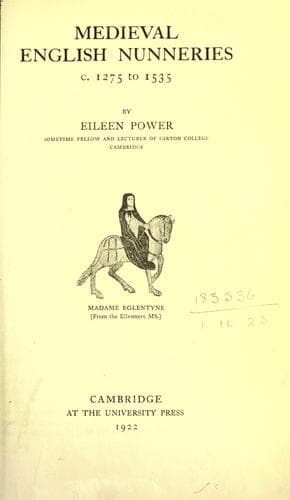
Medieval English Nunneries c. 1275 to 1535Power, Eileen
History
Medieval English Nunneries c. 1275 to 1535
Power, Eileen
Convents -- England; Monastic and religious life of women -- History
The nuns were wont to have recourse to other equally improvident
expedients for obtaining money without regard to future embarrassment.
They farmed their churches and alienated their lands and granges or let
them out on long leases. These practices were constantly forbidden in
episcopal injunctions[676]; at the visitation of Easebourne in 1524 the
Prioress, Dame Margaret Sackfelde, being questioned as to what grants they
had made under their convent seal, said that they had made four, to wit,
one to William Salter to farm the rectory there, another of the proceeds
of the chapel of Farnhurst, another of the proceeds of the chapel of
Midhurst and another to William Toty for his corrody; this was
corroborated by the subprioress, who also mentioned a grant of the
proceeds of the church of Easebourne to a rather disreputable person
called Ralph Pratt; and this is only a typical case[677]. The nunnery of
Wix was reduced to such penury in 1283 on account of various alienations
that Pope Martin IV granted the nuns a bull declaring all such grants
void:
It has come to our ears that our beloved daughters in Christ, the
Prioress and convent of the monastery of Wix (who are under the rule
of a prioress), of the order of St Benedict, in the diocese of London,
as well as their predecessors, have conceded tithes, rents, lands,
houses, vineyards, meadows, pastures, woods, mills, rights,
jurisdictions and certain other goods belonging to the said monastery
to several clerks and laymen, to some of them for life, to some for no
short time, to others in perpetuity at farm or under an annual
payment, and have to this effect given letters, taken oaths, made
renunciations, and drawn up public instruments, to the grave harm of
the said monastery; and some of the grantees are said to have sought
confirmatory letters in common form, concerning these grants, from the
apostolic see[678].
Public-domain text, read in full here on John Shaqi.
Reviews
Reviews
No reviews yet
Be the first to share your thoughts on this work.
Elsewhere in the archive
Join the Discussion
Join the discussion
Sign in to leave a comment or review.
Sign InorCreate an account