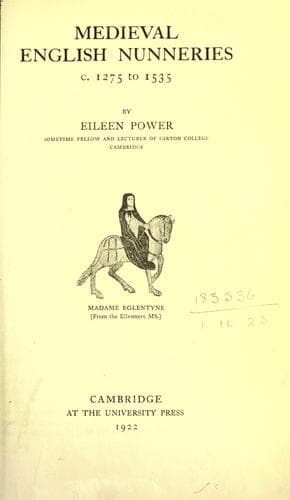
Medieval English Nunneries c. 1275 to 1535Power, Eileen
History
Medieval English Nunneries c. 1275 to 1535
Power, Eileen
Convents -- England; Monastic and religious life of women -- History
Also we enioyne yow, prioresse, and your sucessours vndere payne of
pry[v]acyone and perpetuelle amocyone fro your and thaire astate and
dygnyte that fro hense forthe ye ne thai selle, graunte ne gyfe to ony
persone what euer thai be any corrody, lyverye, pensyone or anuyte to
terme of lyve, certeyn tyme or perpetuelly, but if ye or thai fyrste
declare the cause to vs or our successours bysshoppes of Lincolne, and
in that case have our specyalle licence or of our saide successours
and also the fulle assent of the more hole parte of your couent. Also
we enioyne yow prioresse and your successours vndere the payne of
priuacyone afore saide that ye ne thai selle, gyfe, aleyne, ne felle
no grete wode or tymbere, saue to necessary reparacyone of your place
and your tenaundryes, but if ye and thai hafe specyalle licence ther
to, of vs or our successours bysshoppes of Lincolne and the cause
declared to vs or our successours[750].
An exceptionally conscientious Bishop would sometimes send even more full
and elaborate instructions to a nunnery on the management of its property,
and examples of such minute regulations are to be found in the injunctions
sent to Elstow Abbey at different times by Bishop Bokyngham (1387)[751],
Archbishop Courtenay (1389)[752] and Bishop Flemyng (1421-2)[753]. Bishop
Bokyngham also sent very full injunctions to Heynings in 1392 and these
may be quoted to illustrate the care which the Visitors sometimes took to
set a house upon a firm financial footing, so far as it was possible to do
so by the mere giving of good advice:
Public-domain text, read in full here on John Shaqi.
Reviews
Reviews
No reviews yet
Be the first to share your thoughts on this work.
Elsewhere in the archive
Join the Discussion
Join the discussion
Sign in to leave a comment or review.
Sign InorCreate an account