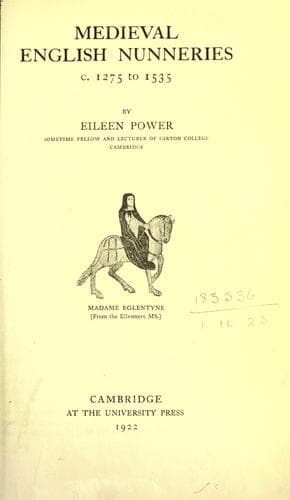
Medieval English Nunneries c. 1275 to 1535Power, Eileen
History
Medieval English Nunneries c. 1275 to 1535
Power, Eileen
Convents -- England; Monastic and religious life of women -- History
Here, as at Usk, Peckham appointed in addition a master to look after
their affairs[743]. At the disorderly house of Arthington Isabella Couvel
was in 1312 associated with the Prioress Isabella de Berghby, but the
Prioress seems to have resented the appointment and promptly ran
away[744]. In the Exeter diocese Bishop Stapeldon made Joan de Radyngton
coadjutress to Petronilla, Abbess of Canonsleigh in 1320[745]; and in the
diocese of Bath and Wells Bishop Ralph of Shrewsbury in 1335 appointed two
coadjutresses to Cecilia de Draycote, Prioress of White Hall, Ilchester,
and in 1351, when his visitation had revealed many scandals at Cannington,
including the simoniacal admission of nuns and unauthorised sale of
corrodies by the Prioress, the Bishop, instead of depriving her "tempered
the rigour of the law with clemency" and appointed two coadjutresses
without whose consent she was to do nothing[746]. Bishop Alnwick made use
of this method of controlling a superior in several cases where serious
mismanagement had come to light at his visitation[747], and other
instances of this method of controlling the administration of a superior
might be multiplied from the episcopal registers.
The appointment of treasuresses and of coadjutresses and the provision for
due consultation of the chapter, custody of the common seal and
presentment of accounts had the purpose of safeguarding the nuns against
reckless expenditure or maladministration by the head of the house, and,
where the injunctions of the Visitor were carried out, such precautions
doubtless proved of use. Some further check was, however, necessary, to
safeguard the nuns against themselves, and to prevent the whole convent
from rash sales of land, alienation of goods and from all those other
improvident devices for obtaining ready money, to which they were so much
addicted. The Bishop often attempted to impose such a check by forbidding
certain steps to be taken without his own consent. The business for which
an episcopal licence was necessary usually comprised the alienation of
land or its lease for life or for a long term of years, the sale of any
corrodies or payment of any fees or pensions, and (as has already been
pointed out) the reception of new inmates, who might overcrowd the house
and thus impose a strain upon its revenues[748]. Other business, such as
the sale of woods, was sometimes included[749]. The prohibition of
corrodies, fees and pensions was doubtless intended to protect the nuns
against the exactions of patrons and other persons, who claimed the right
to pension off relatives or old servants by this means, as well as against
their own improvidence in selling such doles for inadequate sums of ready
money. As typical of such prohibitions may be quoted Alnwick's injunction
(given in two parts) to Harrold in 1442-3:
Public-domain text, read in full here on John Shaqi.
Reviews
Reviews
No reviews yet
Be the first to share your thoughts on this work.
Elsewhere in the archive
Join the Discussion
Join the discussion
Sign in to leave a comment or review.
Sign InorCreate an account