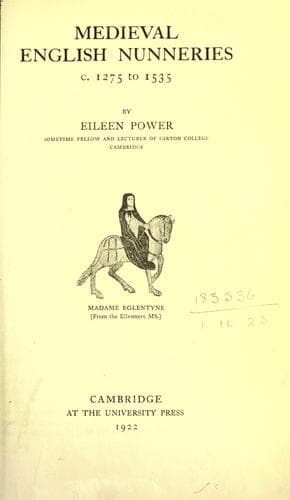
Medieval English Nunneries c. 1275 to 1535Power, Eileen
History
Medieval English Nunneries c. 1275 to 1535
Power, Eileen
Convents -- England; Monastic and religious life of women -- History
Illness and the desire to embrace a stricter rule were exceptional causes
for a temporary breach of enclosure. The great difficulty in administering
_Periculoso_ arose over more usual pretexts. The least objectionable
occasion for leaving cloistral precincts was when convent business
demanded it and this happened frequently to the superior and the
treasuress or cellaress. The journeys which were frequently taken by the
head of a house have already been considered[1142]; but the obedientiaries
also found much scope for wandering in the duties of their offices. The
treasuress and cellaress might be obliged day by day to visit, in the
course of their duties, offices and buildings which lay outside the walls,
and if they were not sober minded women there were ample opportunities for
lingering and gossiping with secular persons and with servants. The
Constitutions of the Legate Ottobon in 1268 attempted to minimise this
danger by enacting that no nun was to go into the different _officinae_,
except those whose offices rendered it necessary to do so, and they were
never to go unaccompanied[1143]. The complaints brought by the nuns of
Gracedieu in 1440-1 against their self-confident cellaress Margaret Belers
show that some such regulation was necessary; it was said that she was
accustomed to visit all the offices by herself, even the granges and other
places where menfolk were working, and that she went there (good zealous
housewife!) "over early in the morning before daybreak"; whereupon Bishop
Alnwick ordered the Prioress to "suffre none of thaym, officiere ne other,
to go to any house of office wythe owte the cloystere, but if ther be an
other nunne approveded in religyone assigned to go wythe hire, eyther to
be wytnesse of others conversatyon"[1144]. Convent business, however,
frequently took the officials further afield than outlying granges and
they undertook journeys hardly less often than did the head of the house.
The Cistercian statutes of 1256-7, in forbidding nuns to leave their
convents, make exception "for the Abbess with two or at most three nuns
and for the cellaress with one, who are permitted to go forth to look
after the business of the house or for other inevitable causes"[1145]. The
evidence of account rolls is invaluable in this connection and shows us
the nuns going marketing or seeking tithes from recalcitrant farmers, or
interviewing tenants about rent. The Chambress of Syon went to London
three times in 1536, doubtless to buy the russets, white cloth, kerseys,
friezes and hollands which figure so largely in her account and to take
the spectacles to be mended; she was a thrifty lady and her expenses were
only 6_d._, 2_d._ and 20_d._ respectively. Her sister the cellaress also
went to London that year and spent 6_d._ on the jaunt[1146]. The nuns of
St Michael's, Stamford, sometimes took long journeys on convent business;
in 1372-3 Dame Katherine Fitzaleyn went "to London and other places about
Public-domain text, read in full here on John Shaqi.
Reviews
Reviews
No reviews yet
Be the first to share your thoughts on this work.
Elsewhere in the archive
Join the Discussion
Join the discussion
Sign in to leave a comment or review.
Sign InorCreate an account