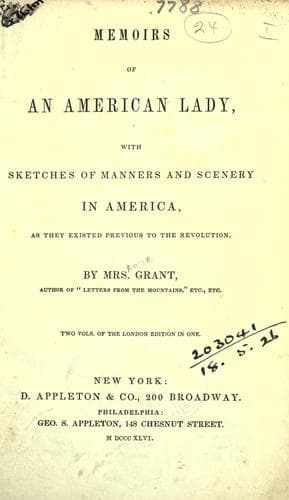
Memoirs of an American Lady: With Sketches of Manners and Scenery in America, as They Existed Previous to the RevolutionGrant, Anne MacVicar
History
Memoirs of an American Lady: With Sketches of Manners and Scenery in America, as They Existed Previous to the Revolution
Grant, Anne MacVicar
Indians of North America; New York (State) -- Social life and customs -- To 1775; Schuyler, Catalina, 1701-1778 or 1779
Before I quit this subject, I must observe a singular coincidence; not
only the training of children, but of plants, such as needed peculiar
care or skill to rear them, was the female province. Every one in town
or country had a garden; but all the more hardy plants grew in the
field, in rows, amidst the hills, as they were called, of Indian corn.
These lofty plants sheltered them from the sun, while the same hoeing
served for both; their cabbages, potatoes, and other esculent roots,
with variety of gourds, grew to a great size, and were of an excellent
quality. Kidney-beans, asparagus, celery, great variety of salads and
sweet herbs, cucumbers, &c., were only admitted into the garden, into
which no foot of man intruded, after it was dug in spring. Here were no
trees, those grew in the orchard in high perfection. Strawberries and
many high flavoured wild fruits of the shrub kind abounded so much in
the woods, that they did not think of cultivating them in their gardens,
which were extremely neat, but small, and not by any means calculated
for walking in. I think I yet see what I have so often beheld both in
town and country, a respectable mistress of a family going out to her
garden, in an April morning, with her great calash, her little painted
basket of seeds, and her rake over her shoulder, to her garden labours.
These were by no means figurative,
“From morn till noon, from noon till dewy eve.”
A woman, in very easy circumstances, and abundantly gentle in form and
manners, would sow, and plant, and rake, incessantly. These fair
gardeners too were great florists; their emulation and solicitude in
this pleasing employment, did indeed produce “flowers worthy of
Paradise.” These, though not set in “curious knots,” were arranged in
beds, the varieties of each kind by themselves; this, if not varied and
elegant, was at least rich and gay. To the Schuylers this description
did not apply; they had gardeners, and their gardens were laid out in
the European manner.
Public-domain text, read in full here on John Shaqi.
Reviews
Reviews
No reviews yet
Be the first to share your thoughts on this work.
Join the Discussion
Join the discussion
Sign in to leave a comment or review.
Sign InorCreate an account