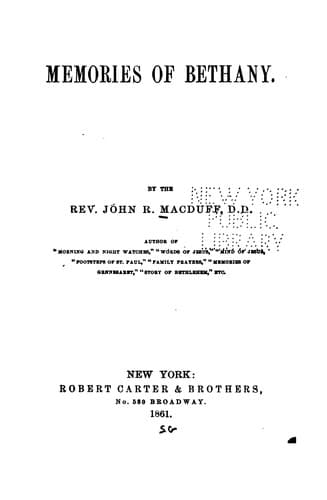
Jesus Christ -- Biography -- Sermons; Lazarus, of Bethany, Saint
As yet the home of Bethany is all happiness. The burial-ground has been
untraversed since, probably years before the dust of one, or perhaps
both parents had been committed to the sepulchre.[8] Death had long left
the inmates an unbroken circle. Can it be that the unwelcome intruder is
so nigh at hand?--that their now joyous dwelling is so soon to echo to
the wail of lamentation? We imagine it but lately visited by Jesus. In a
little while the arrow hath sped; the sacredness of a divine friendship
is no guarantee against the incursion of the sleepless foe of human
happiness. Bethany is a mourning household. The sisters are bowed in the
agony of their worst bereavement--the prop of their existence is laid
low--"_Lazarus is dead!_"
At the very threshold of this touching story, are we not called on to
pause, and read _the uncertainty of earth's best joys and purest
happiness_; that the brightest sunshine is often the precursor of a dark
cloud. When the gourd is all flourishing, a worm may unseen be preying
at its root! When the vessel is gliding joyously on the calm sea, the
treacherous rock may be at hand, and, in one brief hour, it has become a
shattered wreck!
It is the touching record of the inspired historian in narrating
Abraham's heaviest trial--"After _these things_, God did tempt Abraham."
After _what_ things? After a season of rich blessings, gilding a future
with bright hopes!
Would that, amidst our happy homes, and sunshine hours, and seasons of
holy and joyous intercourse between friend and friend, we would more
habitually bear in mind "This is not to last!" In one brief and
unsuspected moment Lazarus may be taken. The messenger may now be on the
wing to lay low some treasured object of earthly solicitude and love.
God would teach us--while we are glad of our gourds--not to be
"exceeding glad;" not to nestle here as if we were to "live alway," but
rather, as we are perched on our summer boughs, to be ready at His
bidding to soar away, and leave behind us what most we prize.
It tells us, too, _the utter mysteriousness of many of the divine
dispensations_.
Public-domain text, read in full here on John Shaqi.
Reviews
Reviews
No reviews yet
Be the first to share your thoughts on this work.
Join the Discussion
Join the discussion
Sign in to leave a comment or review.
Sign InorCreate an account