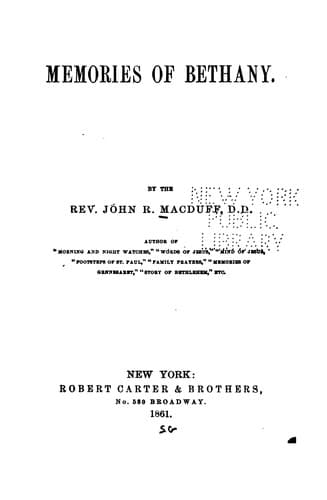
Jesus Christ -- Biography -- Sermons; Lazarus, of Bethany, Saint
In that maiden's breast
Sorrow and loneliness sank darkly down,
Though the blanch'd lips breathed out no boisterous plaint
Of common grief."
The formal sympathisers who gathered around her had observed her
departure. They are led to form their conjectures as to the cause of
this sudden break in her trance of anguish. She had up till that
moment, with the instinctive aversion which mourners only know, and
which we have formerly alluded to in the case of Martha, been shrinking
from facing the gladsome light of heaven, caring not to look abroad on
the blight of an altered world. But the few words her sister uttered,
and which the other auditors manifestly had not comprehended, all at
once rouse her from her seat of pensive sadness, and her shadow is seen
hurrying by the darkened lattice. They can form but one surmise: that,
in accordance with wont, she has betaken herself to the burial-ground to
feed her morbid grief "She goeth unto the grave to weep there." Ah!
little did they know how much nobler was her motive--how truer and
grander the solace she sought and found.
There is little that is really profitable or hallowed in visiting the
grave of loved ones. Though fond affection will, from some false feeling
of the tribute due to the memory of the departed, seek to surmount
sadder thoughts, and linger at the spot where treasured ashes repose,
yet--think and act as we may--there is nothing cheering, nothing
elevating _there_. The associations of the burial-place are all with the
humiliating triumphs of the King of Terrors. It is a view of death taken
from the _earthly_ entrance of the valley, not the _heavenly_ view of it
as that valley opens on the bright plains of immortality. The gay
flowers and emerald sod which carpet the grave are poor mockeries to the
bereft spirit, shrouding, as they do, nobler withered blossoms which the
foot of the destroyer has trampled into dust, and which no earthly
beauty can again clothe, or earthly spring reanimate. They are to be
pitied who have no higher solace, no better remedy for their grief, than
thus to water with unavailing tears the trophies of death; or to read
the harrowing record which love has traced on its slab of cold marble,
telling of the vanity of human hopes.
Public-domain text, read in full here on John Shaqi.
Reviews
Reviews
No reviews yet
Be the first to share your thoughts on this work.
Join the Discussion
Join the discussion
Sign in to leave a comment or review.
Sign InorCreate an account