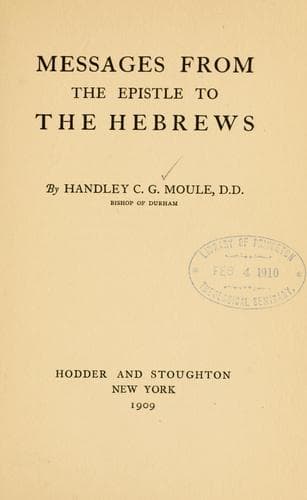
Messages from the Epistle to the HebrewsMoule, H. C. G. (Handley Carr Glyn)
Religion
Messages from the Epistle to the Hebrews
Moule, H. C. G. (Handley Carr Glyn)
Bible. Hebrews -- Commentaries
Then, as the great paragraph approaches its climax, the note of warning
sounds again (ver. 25). The convert, fresh from the reminder of the
"voice" of the sprinkled blood of the better covenant, is cautioned not
to "refuse" it, not to "decline" it ([Greek: me paraitesesthe]). The
primary reference is manifestly to that perpetual danger of the Hebrews,
the temptation to turn back from the Gospel, with its spiritual order
and its hopes of things not yet seen, to the outworn Dispensation, with
its externally majestic circumstances of glorious ritual and imposing
shows of polity and power. They would need again and again to open the
soul's ears and eyes, and steadfastly to recollect, against all
appearances, that we "_are come unto_ the Mount Sion," if they were to
resist the magnetic forces which drew them back towards Sinai--and
towards death. So they were to hear the sweet voices of heavenly love,
and festal life, and blood-bought covenanted peace, sounding from the
true Sion, with joy indeed but also with holy dread. They were to _fear_
lest they should "decline" them, lest sense should conquer faith and the
soul be lost under the mountain of condemnation after all. "For if they
did not escape who on earth declined Him who spoke oraculous warning
([Greek: chrematizonta]), much more shall we not escape, turning from
Him who warns from heaven" (ver. 25). The contemner of the ban of Sinai
fell "stricken through" the body. The "decliner" of the admonition to
turn no more to the hill of doom, but boldly to climb the hill of peace,
will fall stricken through the soul. That warning voice, which once
shook the desert, has now promised (ver. 26)--for a promise, the promise
of an eternal redemption, lies deep in that threatening (Hag. ii.
6)--that not earth only but heaven is yet to feel His shaking, and once
for ever when it comes. He, "yet once more," shall work one vast
"removing"; and then (ver. 27) a stability irremovable shall finally
come in. "The things that have been made," the terrestrial and material
"figures of the real" (ix. 24), are to pass away, never to return, in
order that "the things incapable of disturbance" ([Greek: ta me
saleuomena]) "may remain." And what are these things? Nothing less than
the spiritual, ultimate, all-fulfilling truths and glories to which the
"things made" served as preparation, type, and foil, but which
themselves to all eternity shall know no successors, no "new order"
through which God shall otherwise "fulfil Himself." For what are they,
in their inmost essence? They are the truths which spring always from
the Incarnate Son, and return always into Him; "the redemption that is
in Christ Jesus, with eternal glory."
Public-domain text, read in full here on John Shaqi.
Reviews
Reviews
No reviews yet
Be the first to share your thoughts on this work.
Join the Discussion
Join the discussion
Sign in to leave a comment or review.
Sign InorCreate an account