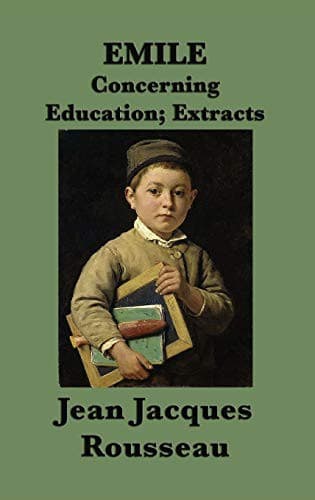
By his manner of asking, you can see that he feels you do not owe him
anything; he knows that what he asks is really a favor to him, which
humanity will induce you to grant. His expressions are simple and
laconic. His voice, his look, his gesture, are those of one equally
accustomed to consent or to refusal. They show neither the cringing
submission of a slave, nor the imperious tone of a master; but modest
confidence in his fellow-creatures, and the noble and touching
gentleness of one who is free, but sensitive and feeble, asking aid of
another, also free, but powerful and kind. If you do what he asks, he
does not thank you, but feels that he has laid himself under
obligation. If you refuse, he will not complain or insist; he knows it
would be of no use. He will not say, "I was refused," but "It was
impossible." And, as has been already said, we do not often rebel
against an acknowledged necessity.
Leave him at liberty and by himself, and without saying a word, watch
what he does, and how he does it. Knowing perfectly well that he is
free, he will do nothing from mere thoughtlessness, or just to show
that he can do it; for is he not aware that he is always his own
master? He is alert, nimble, and active; his movements have all the
agility of his years; but you will not see one that has not some
definite aim. No matter what he may wish to do, he will never
undertake what he cannot do, for he has tested his own strength, and
knows exactly what it is. The means he uses are always adapted to the
end sought, and he rarely does anything without being assured he will
succeed in it. His eye will be attentive and critical, and he will not
ask foolish questions about everything he sees. Before making any
inquiries he will tire himself trying to find a thing out for himself.
If he meets with unexpected difficulties, he will be less disturbed by
them than another child, and less frightened if there is danger. As
nothing has been done to arouse his still dormant imagination, he sees
things only as they are, estimates danger accurately, and is always
self-possessed. He has so often had to give way to necessity that he
no longer rebels against it. Having borne its yoke ever since he was
born, he is accustomed to it, and is ready for whatever may come.
Work and play are alike to him; his plays are his occupations, and he
sees no difference between the two. He throws himself into everything
with charming earnestness and freedom, which shows the bent of his mind
and the range of his knowledge. Who does not enjoy seeing a pretty
child of this age, with his bright expression of serene content, and
laughing, open countenance, playing at the most serious things, or
deeply occupied with the most frivolous amusements? He has reached the
maturity of childhood, has lived a child's life, not gaining perfection
at the cost of his happiness, but developing the one by means of the
other.
Public-domain text, read in full here on John Shaqi.
Reviews
Reviews
No reviews yet
Be the first to share your thoughts on this work.
Elsewhere in the archive
Join the Discussion
Join the discussion
Sign in to leave a comment or review.
Sign InorCreate an account