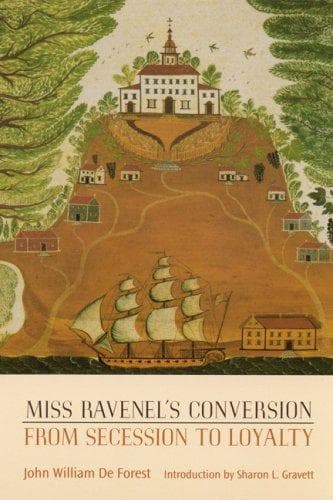
Miss Ravenel's conversion from secession to loyaltyDe Forest, John William
History
Miss Ravenel's conversion from secession to loyalty
De Forest, John William
Historical fiction; United States -- History -- Civil War, 1861-1865 -- Fiction; War stories; Women -- United States -- Fiction
There was a lack of hospital accommodation near Port Hudson, so bare is
the land of dwellings; there was a lack of surgeons, nurses, stores, and
especially of ice, that absolute necessity of surgery in our southern
climate; and therefore the wounded were sent as rapidly as possible to
New Orleans. Ambulances were few at that time in the Department of the
Gulf, and Colburne found the heavy, springless army-wagon which conveyed
him to Springfield Landing a chariot of torture. His arm was swollen to
twice its natural size from the knuckles to the elbow. Nature had set to
work with her tormenting remedies of inflammation and suppuration to
extract the sharp slivers of bone which still hid in the wound
notwithstanding the searching finger and probe of the Surgeon. During
the night previous to this journey neither whiskey nor opium could
enable him to sleep, and he could only escape from his painful
self-consciousness by drenching himself with chloroform. But this
morning he almost forgot his own sensations in pity and awe of the
multitudinous agony which bore him company. So nearly supernatural in
its horror was the burden of anguish which filled that long train of
jolting wagons that it seemed at times to his fevered imagination as if
he were out of the world, and journeying in the realms of eternal
torment. The sluggish current of suffering groaned and wailed its way on
board the steam transport, spreading out there into a great surface of
torture which could be taken in by a single sweep of the eye. Wounded
men and dying men filled the state-rooms and covered the cabin floor and
even the open deck. There was a perpetual murmur of moans, athwart which
passed frequent shrieks from sufferers racked to madness, like
lightnings darting across a gloomy sky. More than one poor fellow drew
his last breath in the wagons and on board the transport. All these men,
thought Colburne, are dying and agonizing for their country and for
human freedom. He prayed, and, without arguing the matter, he wearily
yet calmly trusted, that God would grant them His infinite mercy in this
world and the other.
Public-domain text, read in full here on John Shaqi.
Reviews
Reviews
No reviews yet
Be the first to share your thoughts on this work.
Elsewhere in the archive
Join the Discussion
Join the discussion
Sign in to leave a comment or review.
Sign InorCreate an account