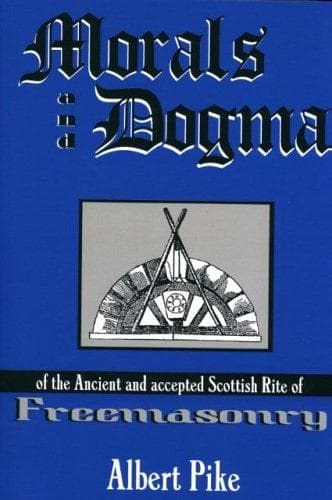
Morals and Dogma of the Ancient and Accepted Scottish Rite of FreemasonryPike, Albert
Religion
Morals and Dogma of the Ancient and Accepted Scottish Rite of Freemasonry
Pike, Albert
Freemasons
Masonry is useful to all men: to the learned, because it affords them
the opportunity of exercising their talents upon subjects eminently
worthy of their attention; to the illiterate, because it offers them
important instruction; to the young, because it presents them with
salutary precepts and good examples, and accustoms them to reflect on
the proper mode of living; to the man of the world, whom it furnishes
with noble and useful recreation; to the traveller, whom it enables to
find friends and brothers in countries where else he would be isolated
and solitary; to the worthy man in misfortune, to whom it gives
assistance; to the afflicted, on whom it lavishes consolation; to the
charitable man, whom it enables to do more good, by uniting with those
who are charitable like himself; and to all who have souls capable of
appreciating its importance, and of enjoying the charms of a friendship
founded on the same principles of religion, morality, and philanthropy.
A Freemason, therefore, should be a man of honor and of conscience,
preferring his duty to everything beside, even to his life; independent
in his opinions, and of good morals; submissive to the laws, devoted to
humanity, to his country, to his family; kind and indulgent to his
brethren, friend of all virtuous men, and ready to assist his fellows by
all means in his power.
Thus will you be faithful to yourself, to your fellows, and to God, and
thus will you do honor to the name and rank of SECRET MASTER; which,
like other Masonic honors, degrades if it is not deserved.
[Illustration]
[Illustration]
V.
PERFECT MASTER.
The Master Khūrūm was an industrious and an honest man. What he was
employed to do he did diligently, and he did it well and faithfully. _He
received no wages that were not his due_. Industry and honesty are the
virtues peculiarly inculcated in this Degree. They are common and homely
virtues; but not for that beneath our notice. As the bees do not love or
respect the drones, so Masonry neither loves nor respects the idle and
those who live by their wits; and least of all those parasitic acari
that live upon themselves. For those who are indolent are likely to
become dissipated and vicious; and perfect honesty, which ought to be
the common qualification of all, is more rare than diamonds. To do
earnestly and steadily, and to do faithfully and honestly that which we
have to do--perhaps this wants but little, when looked at from every
point of view, of including the whole body of the moral law; and even in
their commonest and homeliest application, these virtues belong to the
character of a Perfect Master.
Public-domain text, read in full here on John Shaqi.
Reviews
Reviews
No reviews yet
Be the first to share your thoughts on this work.
Elsewhere in the archive
Join the Discussion
Join the discussion
Sign in to leave a comment or review.
Sign InorCreate an account