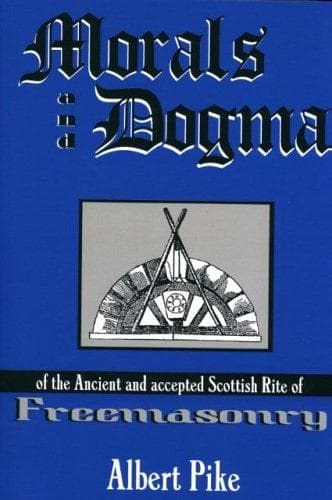
Morals and Dogma of the Ancient and Accepted Scottish Rite of FreemasonryPike, Albert
Religion
Morals and Dogma of the Ancient and Accepted Scottish Rite of Freemasonry
Pike, Albert
Freemasons
Let no man, for his own poverty, become more oppressing and cruel in his
bargain; but quietly, modestly, diligently, and patiently recommend his
estate to God, and follow his interest, and leave the success to Him.
Detain not the wages of the hireling; for every degree of detention of
it beyond the time, is injustice and uncharitableness, and grinds his
face till tears and blood come out; but pay him exactly according to
covenant, or according to his needs.
Religiously keep all promises and covenants, though made to your
disadvantage, though afterward you perceive you might have done better;
and let not any precedent act of yours be altered by any after-accident.
Let nothing make you break your promise, unless it be unlawful or
impossible; that is, either out of your nature or out of your civil
power, yourself being under the power of another; or that it be
intolerably inconvenient to yourself, and of no advantage to another; or
that you have leave expressed or reasonably presumed.
Let no man take wages or fees for a work that he cannot do, or cannot
with probability undertake; or in some sense profitably, and with ease,
or with advantage manage. Let no man appropriate to his own use, what
God, by a special mercy, or the Republic, hath made common; for that is
against both Justice and Charity.
That any man should be the worse for us, and for our direct act, and by
our intention, is against the rule of equity, of justice, and of
charity. We then do not that to others, which we would have done to
ourselves; for we grow richer upon the ruins of their fortune.
It is not honest to receive anything from another without returning him
an equivalent therefor. The gamester who wins the money of another is
dishonest. There should be no such thing as bets and gaming among
Masons: for no honest man should desire that for nothing which belongs
to another. The merchant who sells an inferior article for a sound
price, the speculator who makes the distresses and needs of others fill
his exchequer are neither fair nor honest, but base, ignoble, unfit for
immortality.
It should be the earnest desire of every Perfect Master so to live and
deal and act, that when it comes to him to die, he may be able to say,
and his conscience to adjudge, that no man on earth is poorer, because
he is richer; that what he hath he has honestly earned, and no man can
go before God, and claim that by the rules of equity administered in His
great chancery, this house in which we die, this land we devise to our
heirs, this money that enriches those who survive to bear our name, is
his and not ours, and we in that forum are only his trustees. For it is
most certain that God is just, and will sternly enforce every such
trust; and that to all whom we despoil, to all whom we defraud, to all
from whom we take or win anything whatever, without fair consideration
and equivalent, He will decree a full and adequate compensation.
Public-domain text, read in full here on John Shaqi.
Reviews
Reviews
No reviews yet
Be the first to share your thoughts on this work.
Elsewhere in the archive
Join the Discussion
Join the discussion
Sign in to leave a comment or review.
Sign InorCreate an account