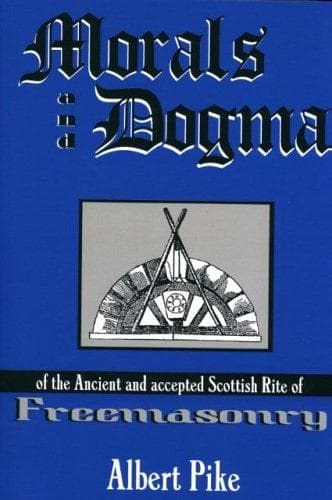
Morals and Dogma of the Ancient and Accepted Scottish Rite of FreemasonryPike, Albert
Religion
Morals and Dogma of the Ancient and Accepted Scottish Rite of Freemasonry
Pike, Albert
Freemasons
To learn and to do!--this is the soul's work here below. The soul grows
as truly as an oak grows. As the tree takes the carbon of the air, the
dew, the rain, and the light, and the food that the earth supplies to
its roots, and by its mysterious chemistry transmutes them into sap and
fibre, into wood and leaf, and flower and fruit, and color and perfume,
so the soul imbibes knowledge and by a divine alchemy changes what it
learns into its own substance, and grows from within outwardly with an
inherent force and power like those that lie hidden in the grain of
wheat.
The soul hath its senses, like the body, that may be cultivated,
enlarged, refined, as itself grows in stature and proportion; and he
who cannot appreciate a fine painting or statue, a noble poem, a sweet
harmony, a heroic thought, or a disinterested action, or to whom the
wisdom of philosophy is but foolishness and babble, and the loftiest
truths of less importance than the price of stocks or cotton, or the
elevation of baseness to office, merely lives on the level of
commonplace, and fitly prides himself upon that inferiority of the
soul's senses, which is the inferiority and imperfect development of the
soul itself.
To sleep little, and to study much; to say little, and to hear and think
much; to learn, that we may be able to do, and then to do, earnestly and
vigorously, whatever may be required of us by duty, and by the good of
our fellows, our country, and mankind,--these are the duties of every
Mason who desires to imitate the Master Khūrūm.
The duty of a Mason as an honest man is plain and easy. It requires of
us honesty in contracts, sincerity in affirming, simplicity in
bargaining, and faithfulness in performing. Lie not at all, neither in a
little thing nor in a great, neither in the substance nor in the
circumstance, neither in word nor deed: that is, pretend not what is
false; cover not what is true; and let the measure of your affirmation
or denial be the understanding of your contractor; for he who deceives
the buyer or the seller by speaking what is true, in a sense not
intended or understood by the other, is a liar and a thief. A Perfect
Master must avoid that which deceives, equally with that which is false.
Let your prices be according to that measure of good and evil which is
established in the fame and common accounts of the wisest and most
merciful men, skilled in that manufacture or commodity; and the gain
such, which, without scandal, is allowed to persons in all the same
circumstances.
In intercourse with others, do not do all which thou mayest lawfully do;
but keep something within thy power; and, because there is a latitude of
gain in buying and selling, take not thou the utmost penny that is
lawful, or which thou thinkest so; for although it be lawful, yet it is
not safe; and he who gains all that he can gain lawfully, this year,
will possibly be tempted, next year, to gain something unlawfully.
Public-domain text, read in full here on John Shaqi.
Reviews
Reviews
No reviews yet
Be the first to share your thoughts on this work.
Elsewhere in the archive
Join the Discussion
Join the discussion
Sign in to leave a comment or review.
Sign InorCreate an account