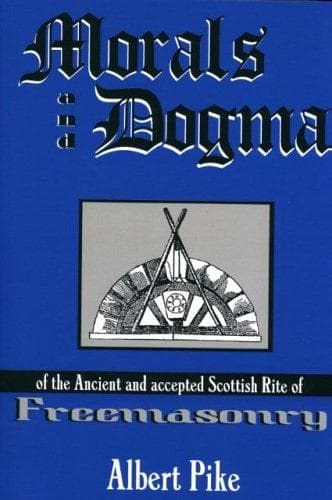
Morals and Dogma of the Ancient and Accepted Scottish Rite of FreemasonryPike, Albert
Religion
Morals and Dogma of the Ancient and Accepted Scottish Rite of Freemasonry
Pike, Albert
Freemasons
If, therefore, he who imagines the world to be filled with his actions
and praises, shall subduct from the number of his encomiasts all those
who are placed below the flight of fame, and who hear in the valley of
life no voice but that of necessity; all those who imagine themselves
too important to regard him, and consider the mention of his name as a
usurpation of their time; all who are too much or too little pleased
with themselves to attend to anything external; all who are attracted by
pleasure, or chained down by pain to unvaried ideas; all who are
withheld from attending his triumph by different pursuits; and all who
slumber in universal negligence; he will find his renown straitened by
nearer bounds than the rocks of Caucasus; and perceive that no man can
be venerable or formidable, but to a small part of his fellow-creatures.
And therefore, that we may not languish in our endeavors after
excellence, it is necessary that, as Africanus counsels his descendants,
we raise our eyes to higher prospects, and contemplate our future and
eternal state, without giving up our hearts to the praise of crowds, or
fixing our hopes on such rewards as human power can bestow.
We are not born for ourselves alone; and our country claims her share,
and our friends their share of us. As all that the earth produces is
created for the use of man, so men are created for the sake of men, that
they may mutually do good to one another. In this we ought to take
nature for our guide, and throw into the public stock the offices of
general utility, by a reciprocation of duties; sometimes by receiving,
sometimes by giving, and sometimes to cement human society by arts, by
industry, and by our resources.
Suffer others to be praised in thy presence, and entertain their good
and glory with delight; but at no hand disparage them, or lessen the
report, or make an objection; and think not the advancement of thy
brother is a lessening of thy worth. Upbraid no man's weakness to him to
discomfit him, neither report it to disparage him, neither delight to
remember it to lessen him, or to set thyself above him; nor ever praise
thyself or dispraise any man else, unless some sufficient worthy end do
hallow it.
Remember that we usually disparage others upon slight grounds and little
instances; and if a man be highly commended, we think him sufficiently
lessened, if we can but charge one sin of folly or inferiority in his
account. We should either be more severe to ourselves, or less so to
others, and consider that whatsoever good any one can think or say of
us, we can tell him of many unworthy and foolish and perhaps worse
actions of ours, any one of which, done by another, would be enough,
with _us_, to destroy his reputation.
If we think the people wise and sagacious, and just and appreciative,
when they praise and make idols of _us_, let us not call them unlearned
and ignorant, and ill and stupid judges, when our neighbor is cried up
by public fame and popular noises.
Public-domain text, read in full here on John Shaqi.
Reviews
Reviews
No reviews yet
Be the first to share your thoughts on this work.
Elsewhere in the archive
Join the Discussion
Join the discussion
Sign in to leave a comment or review.
Sign InorCreate an account