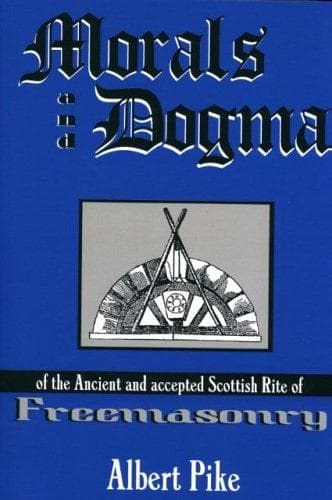
Morals and Dogma of the Ancient and Accepted Scottish Rite of FreemasonryPike, Albert
Religion
Morals and Dogma of the Ancient and Accepted Scottish Rite of Freemasonry
Pike, Albert
Freemasons
Every man hath in his own life sins enough, in his own mind trouble
enough, in his own fortunes evil enough, and in performance of his
offices failings more than enough, to entertain his own inquiry; so that
curiosity after the affairs of others cannot be without envy and an ill
mind. The generous man will be solicitous and inquisitive into the
beauty and order of a well-governed family, and after the virtues of an
excellent person; but anything for which men keep locks and bars, or
that blushes to see the light, or that is either shameful in manner or
private in nature, this thing will not be his care and business.
It should be objection sufficient to exclude any man from the society of
Masons, that he is not disinterested and generous, both in his acts, and
in his opinions of men, and his constructions of their conduct. He who
is selfish and grasping, or censorious and ungenerous, will not long
remain within the strict limits of honesty and truth, but will shortly
commit injustice. He who loves himself too much must needs love others
too little; and he who habitually gives harsh judgment will not long
delay to give unjust judgment.
The generous man is not careful to return no more than he receives; but
prefers that the balances upon the ledgers of benefits shall be in his
favor. He who hath received pay in full for all the benefits and favors
that he has conferred, is like a spendthrift who has consumed his whole
estate, and laments over an empty exchequer. He who requites my favors
with ingratitude adds to, instead of diminishing, my wealth; and he who
cannot return a favor is equally poor, whether his inability arises from
poverty of spirit, sordidness of soul, or pecuniary indigence.
If he is wealthy who hath large sums invested, and the mass of whose
fortune consists in obligations that bind other men to pay him money, he
is still more so to whom many owe large returns of kindnesses and
favors. Beyond a moderate sum each year, the wealthy man merely
_invests_ his means: and that which he _never_ uses is still like
favors unreturned and kindnesses unreciprocated, an actual and real
portion of his fortune.
Public-domain text, read in full here on John Shaqi.
Reviews
Reviews
No reviews yet
Be the first to share your thoughts on this work.
Elsewhere in the archive
Join the Discussion
Join the discussion
Sign in to leave a comment or review.
Sign InorCreate an account