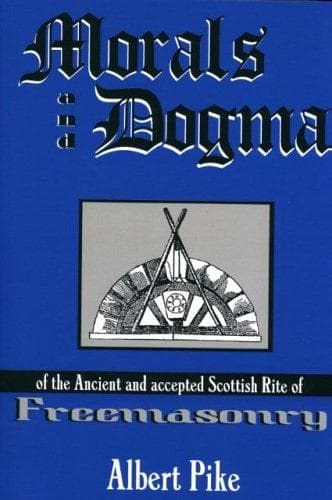
Morals and Dogma of the Ancient and Accepted Scottish Rite of FreemasonryPike, Albert
Religion
Morals and Dogma of the Ancient and Accepted Scottish Rite of Freemasonry
Pike, Albert
Freemasons
Those who are invested with the power of judgment should judge the
causes of all persons uprightly and impartially, without any personal
consideration of the power of the mighty, or the bribe of the rich, or
the needs of the poor. That is the cardinal rule, which no one will
dispute; though many fail to observe it. But they must do more. They
must divest themselves of prejudice and preconception. They must hear
patiently, remember accurately, and weigh carefully the facts and the
arguments offered before them. They must not leap hastily to
conclusions, nor form opinions before they have heard all. They must not
presume crime or fraud. They must neither be ruled by stubborn pride of
opinion, nor be too facile and yielding to the views and arguments of
others. In deducing the motive from the proven act, they must not assign
to the act either the best or the worst motives, but those which they
would think it just and fair for the world to assign to it, if they
themselves had done it; nor must they endeavor to make many little
circumstances, that weigh nothing separately, weigh much together, to
prove their own acuteness and sagacity. These are sound rules for every
juror, also, to observe.
In our intercourse with others, there are two kinds of injustice: the
first of those who offer an injury; the second, of those who have it in
their power to _avert_ an injury from those to whom it is offered, and
yet do it not. So _active_ injustice may be done in two ways--by force
and by fraud,--of which force is lion-like, and fraud fox-like,--both
utterly repugnant to social duty, but fraud the more detestable.
Every wrong done by one man to another, whether it affect his person,
his property, his happiness, or his reputation, is an offense against
the law of justice. The field of this Degree is therefore a wide and
vast one; and Masonry seeks for the most impressive mode of enforcing
the law of justice, and the most effectual means of preventing wrong and
injustice.
Public-domain text, read in full here on John Shaqi.
Reviews
Reviews
No reviews yet
Be the first to share your thoughts on this work.
Elsewhere in the archive
Join the Discussion
Join the discussion
Sign in to leave a comment or review.
Sign InorCreate an account