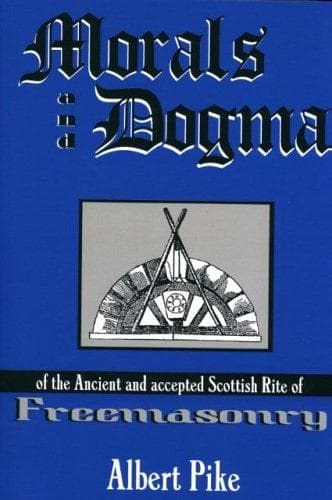
Morals and Dogma of the Ancient and Accepted Scottish Rite of FreemasonryPike, Albert
Religion
Morals and Dogma of the Ancient and Accepted Scottish Rite of Freemasonry
Pike, Albert
Freemasons
What if our faculties should be so enhanced in a future life as to
enable us to perceive and trace the ineffaceable consequences of our
idle words and evil deeds, and render our remorse and grief as eternal
as those consequences themselves? No more fearful punishment to a
superior intelligence can be conceived, than to see still in action,
with the consciousness that it must continue in action forever, a cause
of wrong put in motion by itself ages before.
Masonry, by its teachings, endeavors to restrain men from the commission
of injustice and acts of wrong and outrage. Though it does not endeavor
to usurp the place of religion, still its code of morals proceeds upon
other principles than the municipal law; and it condemns and punishes
offences which neither that law punishes nor public opinion condemns. In
the Masonic law, to cheat and overreach in trade, at the bar, in
politics, are deemed no more venial than theft; nor a deliberate lie
than perjury; nor slander than robbery; nor seduction than murder.
Especially it condemns those wrongs of which the doer induces another to
partake. _He_ may repent; _he_ may, after agonizing struggles, regain
the path of virtue; _his_ spirit may reachieve its purity through much
anguish, after many strifes; but the weaker fellow-creature whom he led
astray, whom he made a sharer in his guilt, but whom he cannot make a
sharer in his repentance and amendment, whose downward course (the first
step of which _he_ taught) he cannot check, but is compelled to
witness,--what forgiveness of sins can avail him there? _There_ is his
perpetual, his inevitable punishment, which no repentance can alleviate,
and no mercy can remit.
Let us be just, also, in judging of other men's motives. We know but
little of the real merits or demerits of any fellow-creature. We can
rarely say with certainty that this man is more guilty than that, or
even that this man is very good or very wicked. Often the basest men
leave behind them excellent reputations. There is scarcely one of us who
has not, at some time in his life, been on the edge of the commission of
a crime. Every one of us can look back, and shuddering see the time when
our feet stood upon the slippery crags that overhung the abyss of guilt;
and when, if temptation had been a little more urgent, or a little
longer continued, if penury had pressed us a little harder, or a little
more wine had further disturbed our intellect, dethroned our judgment,
and aroused our passions, our feet would have slipped, and we should
have fallen, never to rise again.
Public-domain text, read in full here on John Shaqi.
Reviews
Reviews
No reviews yet
Be the first to share your thoughts on this work.
Elsewhere in the archive
Join the Discussion
Join the discussion
Sign in to leave a comment or review.
Sign InorCreate an account